

A lighthouse for STEM teacher education and training in Europe

Professional Development Activities

During 2022-2025, our project partners jointly developed and tested three innovative professional development formats for STEM education in Europe: collaborative summer schools, peer learning through job shadowing, and European workshop series. These formats addressed European key priorities such as environmental challenges, digital competencies, diversity and inclusion, and interdisciplinary and inquiry-based STEM education. The project aimed to enhance STEM education by providing practical, interactive, and contextually adaptable professional learning opportunities for pre- and in-service teachers and teacher educators.

For more detailed information on our findings and results, download the full concept for professional learning.

Concept for Professional Learning

Job shadowing

We facilitated peer- learning through jobshadowing: CPD-providers and ITE-educators from different countries attended each other’s courses to learn for each other.

This gave teacher educators the opportunity to observe and experience practices of their European colleagues. Jobshadowing was also done online, so it did not require traveling.

Teacher educators can, based on their observation of the session, reflected on their own practice, and shaped it accordingly. Then could convey obtained knowledge to teachers in both ITE and CPD sessions and share the best practices in order to:

  • actively engage teachers
  • provide teachers with innovative teaching methods (such as inquiry-based learning, applications to real life)
  • make the European priorities and bringing in multi-country, multi-disciplinary perspectives on these topics.

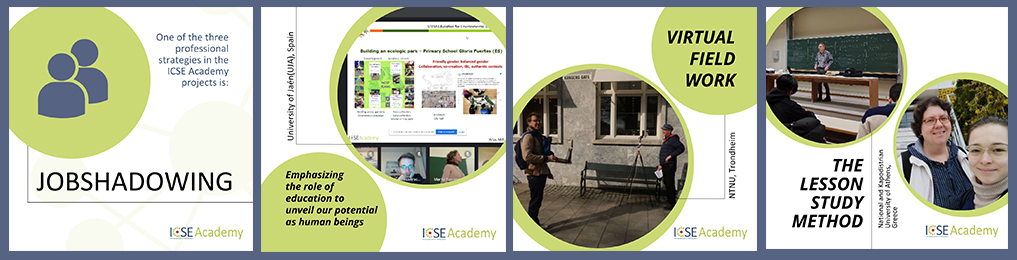
ICSE Academy European Jobshadowing, was one of three Professional learning strategies.

UJA, Spain

Job Shadowing session on STEM Education for Environmental Citizenship

Led by UJA 20 February 2023

Challenging our ideas about how to best use STEM education to generate highly committed and well-informed environmental citizens. Thank you to colleagues from Cyprus, The Netherland Austria and Spain for joining this stimulating job-shadowing session as part of the ICSE Teacher Academy.

Social media post:

Twitter

Mit dem Laden des Tweets akzeptieren Sie die Datenschutzerklärung von Twitter.
Mehr erfahren

Inhalt laden

Summary of the job shadowing session led by UJA on 20 February 2023

The job shadowing session started by discussing a recent new about climate change crisis and emphasizing the key role of education in general, and STEM education in particular, to unveil our whole potential as human beings to address current societal and environmental challenges. After doing some interactive activities to explore and exchange initial ideas about how to significantly influence students’ knowledge, values and behaviours about STEM and sustainability, we had a look at the specialised literature to find out what are the key features of effective educational interventions. Finally, we discussed a case of a school community project aimed at designing an eco-park as an inspiring example showing synergies between STEM education and education for environmental citizenship.
NTNU, Norway

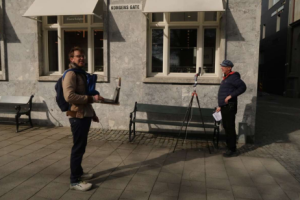
360 degree virtual field work from the center of Trondheim

Using a mobile office solution, streaming live from Trondheim city center.

In the walls` calcium-stone, there are 400-million-year-old fossils

Virtual field trip from the center of Trondheim (PDF)

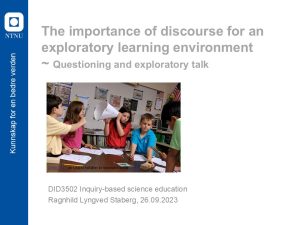
A lesson on the topic inquiry-based learning

Tuesday 26th September 2023 teacher educators from Sweden, Turkey and Lithuania took part in job shadowing at NTNU, Trondheim, Norway. Ragnhild Staberg held a lesson on the topic inquiry-based learning, more precisely questioning and exploratory talk, for her pre-service students. Parts of the lesson will be transformed and implemented in Sweden during this autumn.
UM, Malta

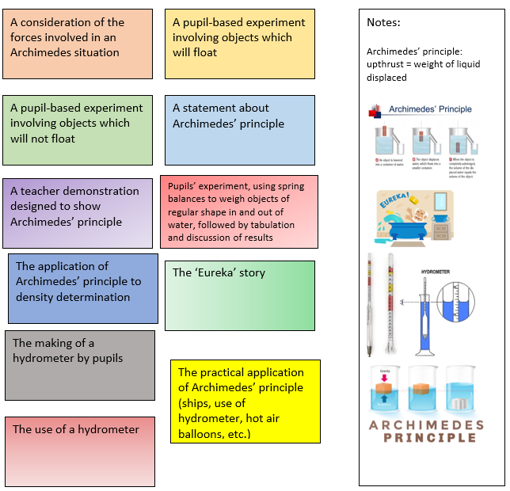
Sequencing a science lesson

Led by UM October 26th 2023

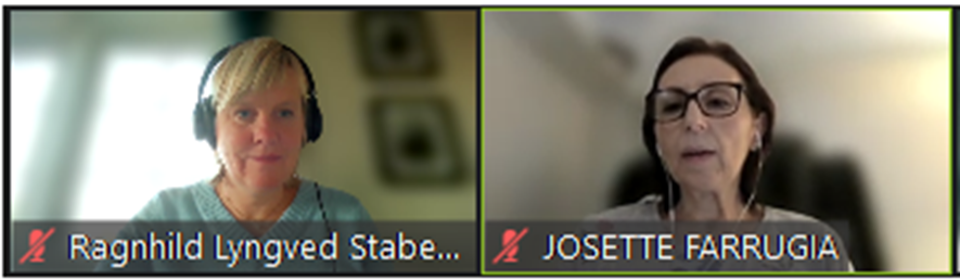
Thursday 26th October 2023 Josette Farrugia held an online session for her student teachers. The topic was “Sequencing a science lesson”, and Ragnhild Lyngved Staberg from Norway took part as an external observer. Parts of the session will now be transferred to Norwegian pre-service teachers.

JU, Sweden

TRANSFERRING A JOB SHADOWING ACTIVITY

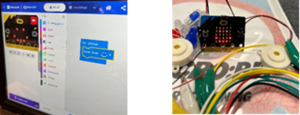
One of the professional development activities in the ICSE Academy project is the Job shadowing activity. In November 2023, Eva-Lena Jonsson at Jönköping University, Sweden, was invited to a lecture about Micro:bit coding at the Norwegian University of Science and Technology (NTNU). Then she transferred it to her own teaching. After some adjustments it is possible to hold a similar lesson in another European country.

This makes Europe a bit ‘smaller’ and provides a possibility for a more equal teacher education in STEM subjects in Europe.

VU, Lithuania

INQUIRY-BASED STEAM EDUCATION

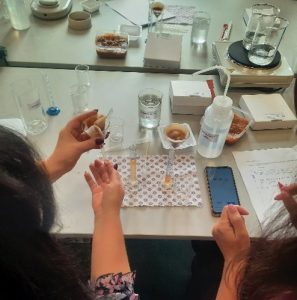
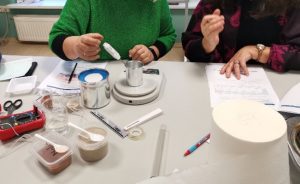
The Job shadowing seminar in Lithuania was part of the professional development program “Inquiry-Based STEAM Education: Mathematical Processing of Data and Evaluation of Results”, organized by the STEAM Centre of Šiauliai Academy (Vilnius University). It targeted in-service primary and secondary school teachers seeking to enhance their competencies in research-based STEAM teaching.

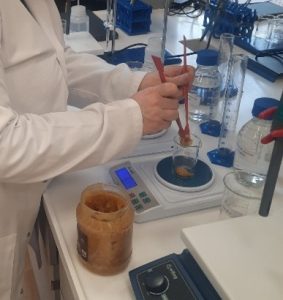
As part of this initiative, international project partners participated in a Job shadowing activity, observing a hands-on biology workshop on fruit juice extraction using the pectinase enzyme. This allowed them to explore how inquiry-based and cooperative teaching methods are applied in Lithuanian classrooms, gain insights into local educational practices, and reflect on how these approaches could be adapted in their own contexts.

The Job shadowing experience supported cross-cultural learning, highlighted the practical integration of theory and experimentation, and contributed to the broader goals of the project in promoting innovation and quality in science education.


HU, Turkey

Job Shadowing session on reverse engineering practices

Led by HU 08 June 2023

Brief description and goal(s) of the activity

Reverse engineering as a method used to

  • understand a product or software’s design,
  • discover its functions,
  • identify its components or
  • make changes to an existing system
Screenshot of a zoomcall jobshadowing session.

Summary of observation

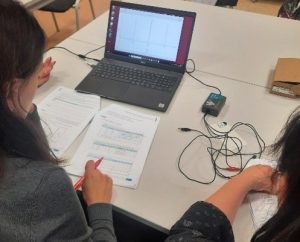
Very productive connections theories and practical examples (practical activities with circuits and sensors):

·       Measuring the body temperature at the entrances to the hotel and warning people whose body temperature is above critical values,

·       Automatically activate ventilation systems depending on the amount of CO2 in the environment,

·       To save energy by determining the amount of daylight in the environment and keeping the amount of light in the environment at a certain value.

Lessons learned: educator/activity

Nice example of team teaching with practical activities.

Lessons learned: job shadower

Challenging questions and searching for different solutions.

Screenshot of a jobshadowing Zoom call.

EDEX, Cyprus

Dynamic Geometry in Mathematics Teaching

online MA class on March 30, 2024, observed by Giorgos Psycharis.

KLU, Austria

Supporting Course for Teaching Practice in Mathematics

Daniela Steflitsch &Katrin Kanatschnig (University Klagenfurt, Austria) on December 12, 2023

CPU, Slovakia

March 1-7, 2023

Author Janka Medová

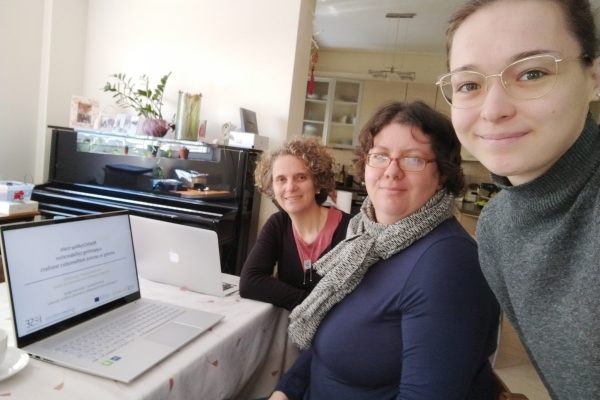
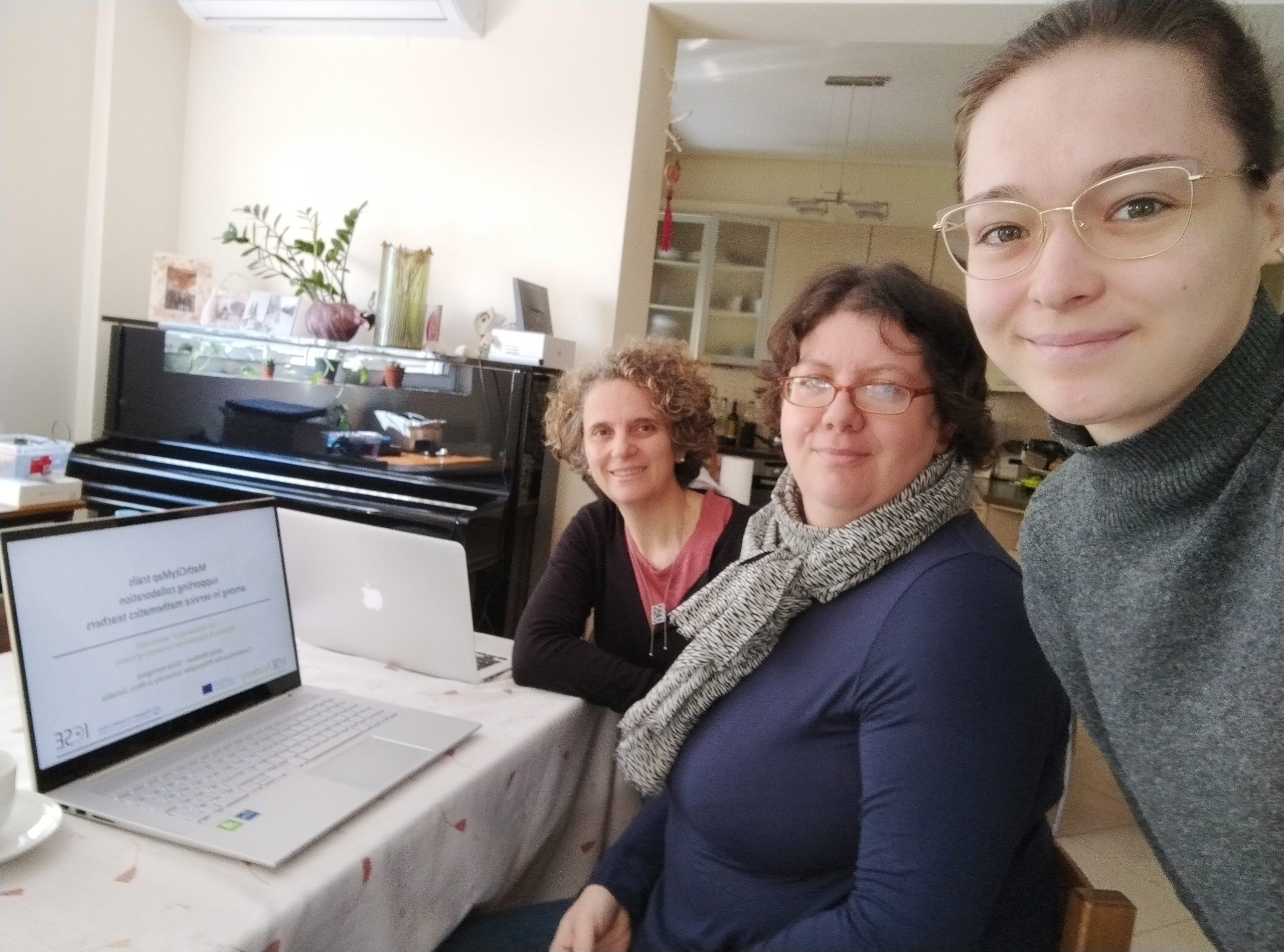
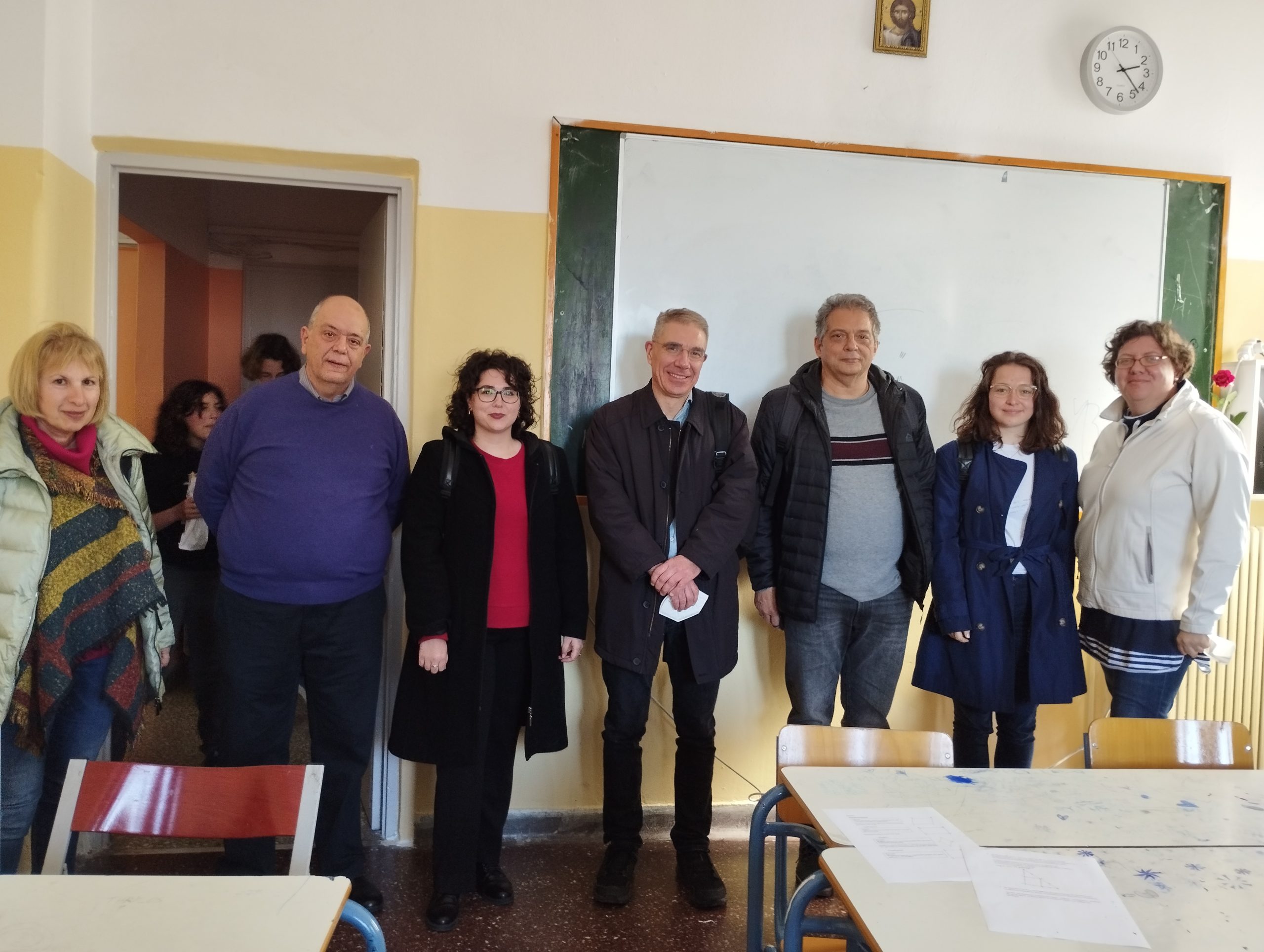
Assoc. Paed Dr. Janka Medová, PhD. and Mgr. Silvia Haringová from the Department of Mathematics of the Faculty of Mathematics of the Constantine the Philosopher University in Nitra took part in an unusual activity. They spent a stimulating week at the Department of Mathematics of the National and Kapodastrian University of Athens in Greece. They participated in the activities of prof. Despina Potari and Dr. Nikolaos Metaxas, especially the sessions of professional development for mathematics teachers using the lesson study method. In lesson study, four steps are cyclically repeated: (1) studying, (2) planning the lesson, (3) implementing and observing the planned lesson, and (4) reflecting on the implementation. During the week in Athens, the participants engaged in all the steps of one cycle with a group of mathematics teachers who have been working together for about three months.

The planned activities had to be modified due to the unrest caused by the tragic train collision that occurred just before their arrival.

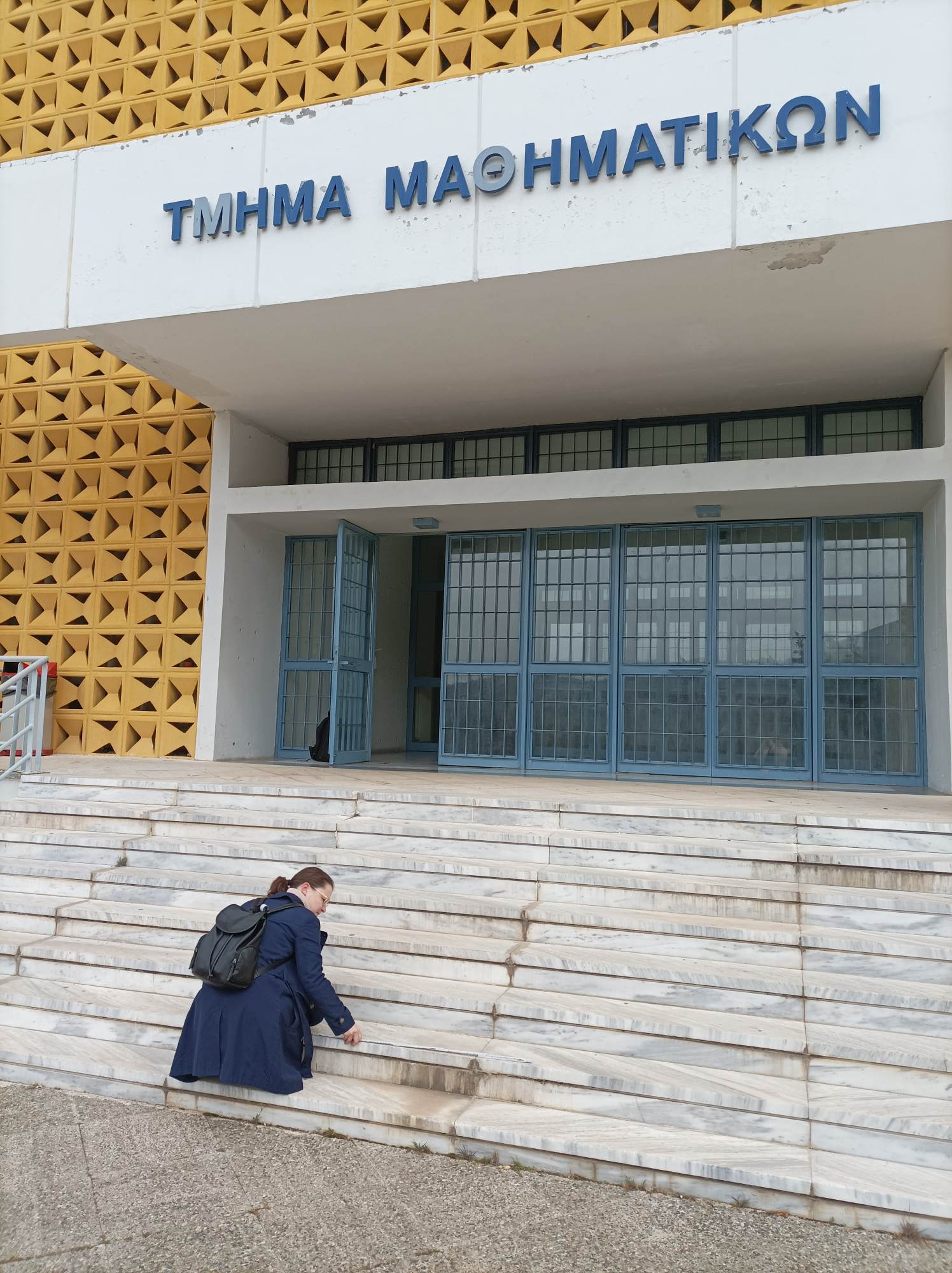
On Thursday morning, they attended a working meeting of the team that implements professional development for mathematics teachers using the lesson study method, which Silvia is focusing on in her dissertation. Afterwards, they prepared a MathCityMap trail in the Department’s facilities. Later, they attended a tutorial for first year mathematics teacher education students on set theory. In the afternoon they participated in lesson planning as part of a lesson study.

Friday and Saturday’s schedule was modified because the students completely blocked the entrance to the university as part of the protests. The seminar for PhD students was therefore held online from the living room of prof. Desipina Potari. Janka and Silvia presented to the participants the activities they are carrying out in Nitra within national and international projects and their adaptation of the lesson study model. The model was adapted by them to the national specificities of Slovakia and to work with the MatCityMap system and mathematical trails. Due to the weather and the unavailability of working spaces at the university, further consultations for Silvia’s dissertation took place outdoors.

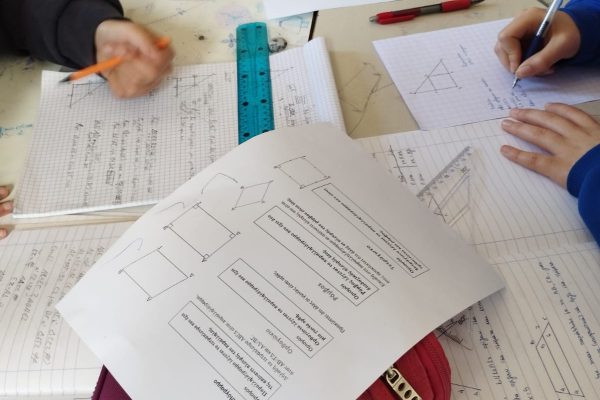
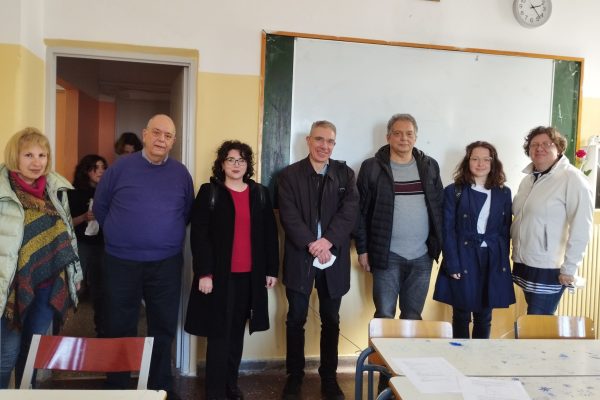
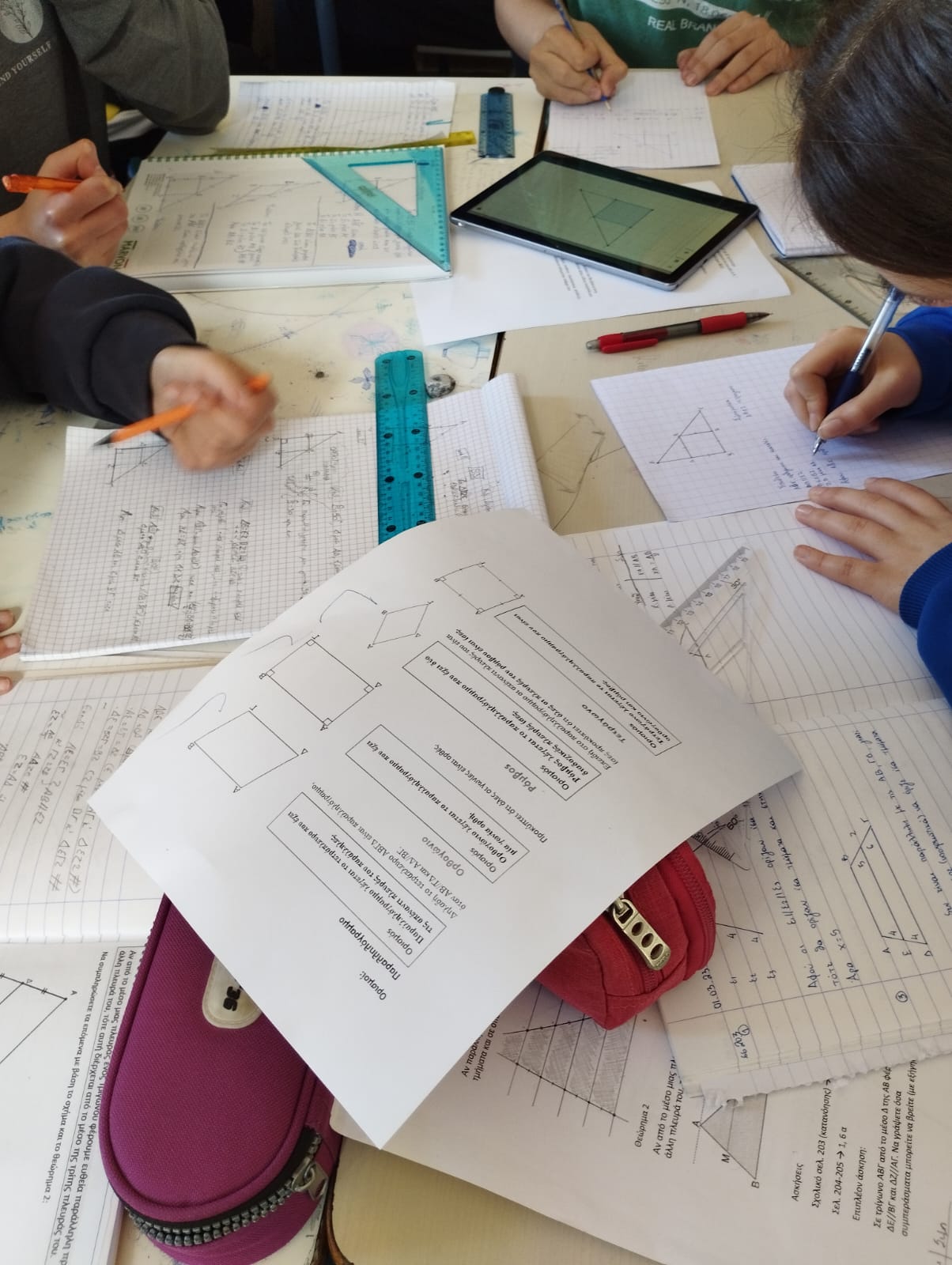
Monday was spent by both job-shadowing participants at the Joint Experimental School in Piraeus, assisted and interpreted by colleagues and students of the Athens Department of Mathematics. They observed students proving selected properties of triangles during the lessons scheduled for Thursday’s meeting.

On Tuesday, they participated in an on-line teachers’ reflection on the lesson implemented. The teachers had many thought-provoking insights. Both participants actively participated in the discussion.

The described job-shadowing was created by a combination of work in several projects. Within the KEGA project Cooperation as a means of professional development of mathematics teachers Silvia and Janka are carrying out a lesson study not only about mathematical trails and within the international project ICSE Academy there was an opportunity to consult their work with a leading world expert. The cooperation is not over, colleagues from Athens are planning to participate in online meetings with Slovak teachers.


Photographer Silvia Haringová

NKUA, Greece

Lesson study method

Led by CPU March 1st-7th 2023

Author Janka Medová, CPU, Slovakia

PHFR, Germany

Job Shadowing session on inclusion and diversity in the course aiming at the content knowledge in Combinatorics and Graph Theory

Led by PHFR 22 June 2023

Brief Description and Goal(s) of the Activity

The activity was a Continuing Professional Development (CPD) course on 3D printing, aimed at enhancing teachers’ competencies in integrating 3D printing technology into mathematics education. The workshop balanced theoretical lectures and practical hands-on activities to familiarize teachers with 3D design and printing using CAD software.

A black and orange 3d printer is standing on a grey desk. Next to it is a role of white filament. In the background there is a second 3d printer with yellow filament.

Participants and Starting Situation

There were 16 participants in the 3-hour workshop. Participants included teachers with varying levels of experience in teaching and prior exposure to CPD and technology, ranging from a trainee teacher to experienced educators with years of teaching practice.

Aim/Learning Questions of the Shadowing Partner(s)

The aim was to enhance digital literacy and practical application of 3D printing in mathematics education. Participants were expected to learn the technical aspects of 3D printing and apply it in their teaching practices, focusing on sustainability and practical mathematical problem-solving.

Summary of Observation

Participants engaged in hands-on learning using Tinkercad to design and print 3D models. They faced some technical challenges, particularly those less familiar with CAD software, but overall, the combination of theoretical and practical elements was effective. The session included discussions on sustainable use of 3D printing in education.

Lessons Learned: Educator/Activity

Educators observed the importance of balancing technical detail with practical application. Simplifying complex topics and providing introductory tutorials on digital tools such as Tinkercad were essential for accessibility and engagement.

Lessons Learned: Job Shadower

The job shadower highlighted the value of hands-on learning and the practical application of 3D printing in teaching. They also emphasized the need for cooperative learning approaches to foster peer collaboration and support less technically experienced participants​.

UU, Netherlands

Job Shadowing session on diversity in STEM education

Led by UU 03 April 2023

Report by Annette Lykknes <annette.lykknes@ntnu.no>

Brief description and goal(s) of the activity

The presented goal was twofold: 1) to learn about dimensions of diversity, and to 2) learn how to design for diversity/inclusive science education.

(I learn off-session that the course “focuses on the design of instructional materials for formal and informal education within the domain of natural sciences and mathematics. Design theories, principles, and heuristics are applied to concrete design processes and products.”)

Participants and starting situation

The lecturer briefly introduced himself and the topic. He emphasised that he was not an expert in the field, but that he had some experience from European projects. He was interested in the students ”help”/their perspectives on the matter.

(My comment: The “excuse”/”disclaimer” in the beginning was not necessary, in fact it might have confused students. It would suffice to claim expertise in terms of experience.)

Aim/learning questions of the shadowing partner(s)

My aim was to learn more about how to teach in a way that respects multiple cultural backgrounds, both in terms of how to teach science that way, and how to teach teacher students how to do it.

Summary of observation

The teaching session consisted of two parts, as announced initially. As an introduction to the whole session, the lecturer drew the background for including inclusive/culturally conscious teaching, by referring to system discrimination, results from PISA 2018, the UNESCO report Building our futures together (2021), and through examples of “the stories we tell” which are predominantly stories of Western, while male scientists.

In part 1, the lecturer presented a framework developed to identify diversity, in terms of ethnicity, socio-economic status, gender, sex, sexual orientation, national origin, first language, physical, emotional, developmental, (dis)ability, age, religious or spiritual affiliation, race, followed by a group activity (10 min) where each group discussed one of the elements from the framework. The part was concluded with a plenary session with input from all (most?) groups.

In part 2, the lecturer presented some examples of how to increase awareness/consciousness about cultural differences and diversity when teaching: 1) Rich contexts bring language (choice of words), 2) Multi-cultural history as a resource (choice of examples), 3) Diverse methods as a resource, 4) Controversal topics, and 5) Use of role models. The intro was followed by group work (15 min) which was concluded with input from a few groups, ending in examples of how to address the WHY aspect and the HOW aspect of designing for diversity.

Lessons learned: job shadower

I found the lesson to be well-structured, informative and engaging. I was introduced to some new literature/reports that might be useful, and it helped me structure some of the ideas I already have in terms of cultural-sensitive teaching for diversity.

CUNI, Czech Republic

Job Shadowing session on inclusion and diversity in the course aiming at the content knowledge in Combinatorics and Graph Theory

Led by CUNI 25 April 2023

Aim/learning questions of the shadowing partner(s)

How to include the pedagogical knowledge and pedagogical content knowledge involving European priorities in the course aiming at content knowledge (mathematics, combinatorics, prof of isomorphism).

Summary of observation

Combinatorics is often considered as a difficult part of mathematics. However, only limited knowledge of facts is needed for solving even challenging problems. It is nice field including many open problems, where open means allowing different problem-solving strategies and approaches to solutions. During the problem-solving workshop the educator used the student`s four questions. For me, it was very useful to see that even after checking the common understanding of the problems, students came with various interpretations of the wording that caused solving of two various problems. The educator always asked student for more strategies and for looking-back using two essential questions in counting tasks:

  1. Are all the elements of set of outcomes included?
  2. Are there any elements of the set of outcomes that are counted twice?

There was a discussion with students about natural tendency of students to tackle the new problems from various points of view leading to different strategies but the same result and how to deal with these situations in the classroom.

One of the problems did not aim at counting but to identify combinatorial situations with isomorphic mathematical model where students needed to use various representations and visualisations and discuss how these relate to individual approaches of their future pupils.

Lessons learned: educator/activity

The previous knowledge of the solvers of the problem shapes the process of solution of the problems. When working with various situations leading to Catalan numbers of students of informatics supervised built on their previous knowledge from informatics (coding, binary trees) and were able to find several mathematical relationships based on their previous experience.

Lessons learned: job shadower

Before the individual or group-work it is necessary to ensure that the students share the same understanding of the problem. And, despite reporting in literature, the approaches to combinatorial problems do not seem be related to the order in which the problems and relationships were introduces, but on individual preferences of the students.

Even students who do not contribute to the discussion may be deeply involved in solving the problem, as I saw it during the break where students who were quiet during the first part of the session came to discuss some aspects of the problems solved.

The European Workshop Series

The European workshop series was an online workshop series on European key priorities emphasizing the European dimension of teaching. Target groups were pre-service and in-service teachers.

The focus of this workshop series was bringing participants up to date in research and teaching in the STEM subjects (Science, Technology, Engineering and Mathematics) in connection with European priorities such as fostering sustainability, digital skills and intercultural learning.

The series was structures around four clusters:

  • Cluster 1: Tools and approaches to deal with sustainability issues in STEM education. Please register by February 26th the latest
  • Cluster 2: Diversity and inclusion in STEM. Please register by April 9th the latest
  • Cluster 3: STEM in digital era. Please register by April 30th the latest
  • Cluster 4: Innovative assessment in STEM education. Please register by May 21st the latest.

Course Materials

Access materials from each session

Course Guide

Find out more about each of the courses

National Workshops

Additionally to the European Workshop Series, the project partners of each country offered a number of workshops for teachers in their region. In Norway for example, in-service-teachers participated in programming workshops with the following foci:

  • Interdisciplinary workshop with programming of an irrigation system.
  • A humidity sensor and a water pump regulate supplies water for irrigation of crops.

You can find more reports on national workshops in our Blog.

Worskshop with teachers. Photo

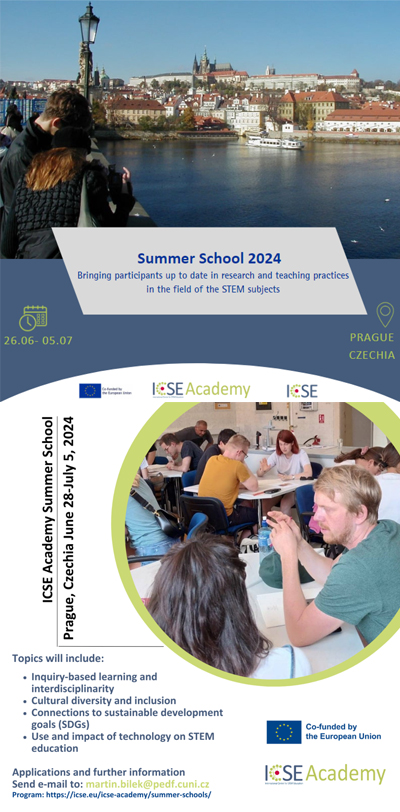
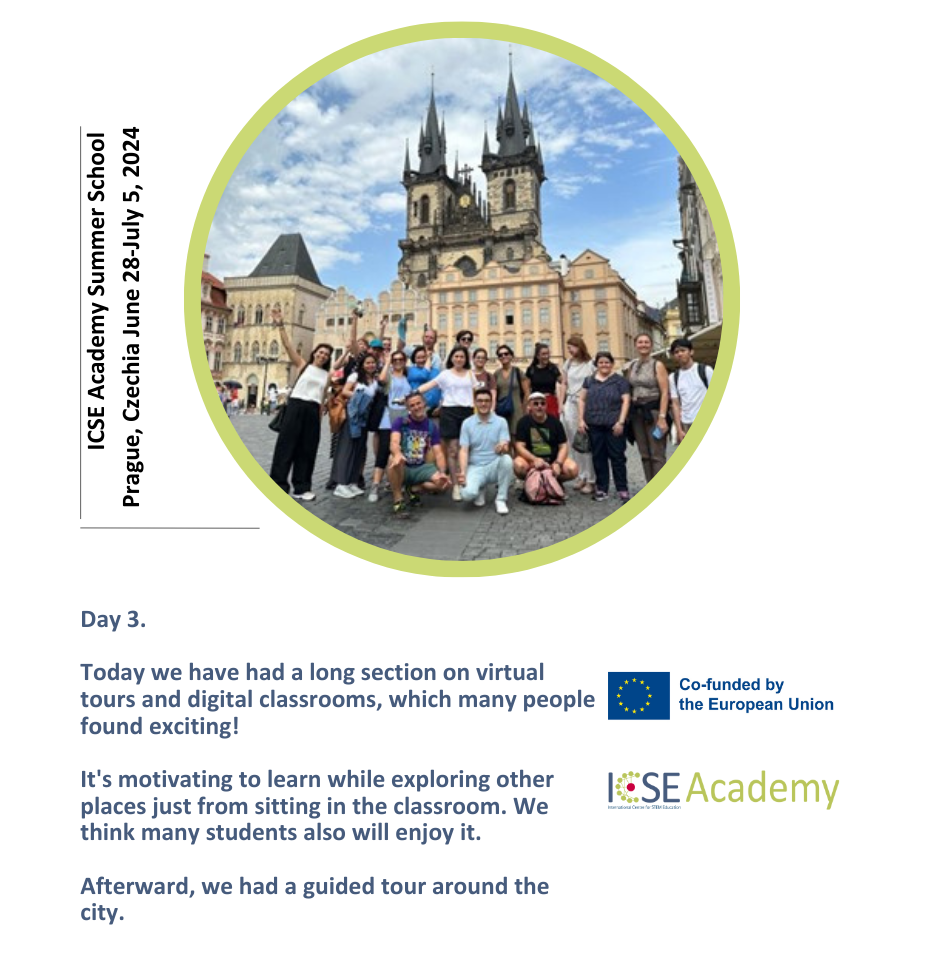
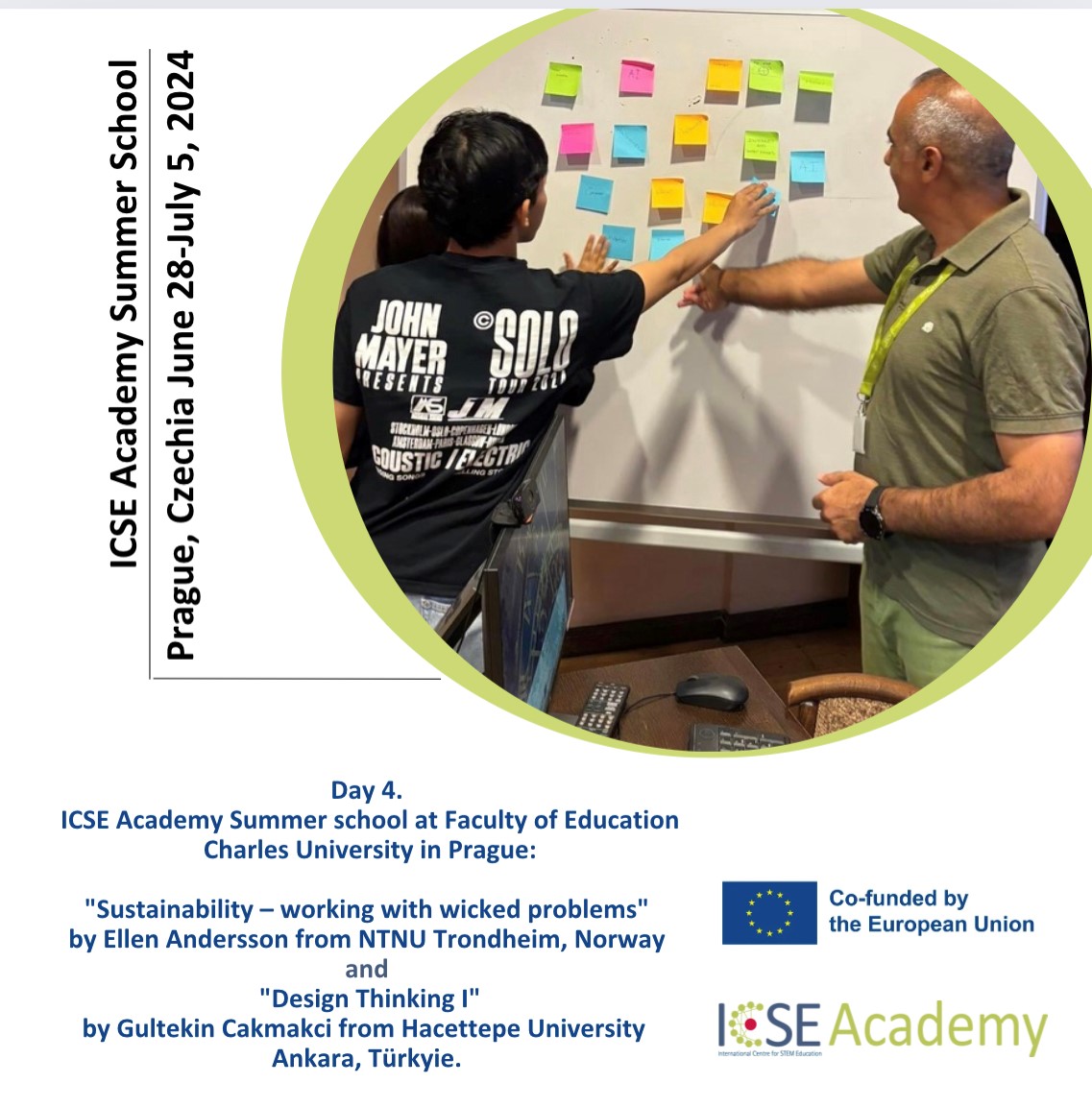
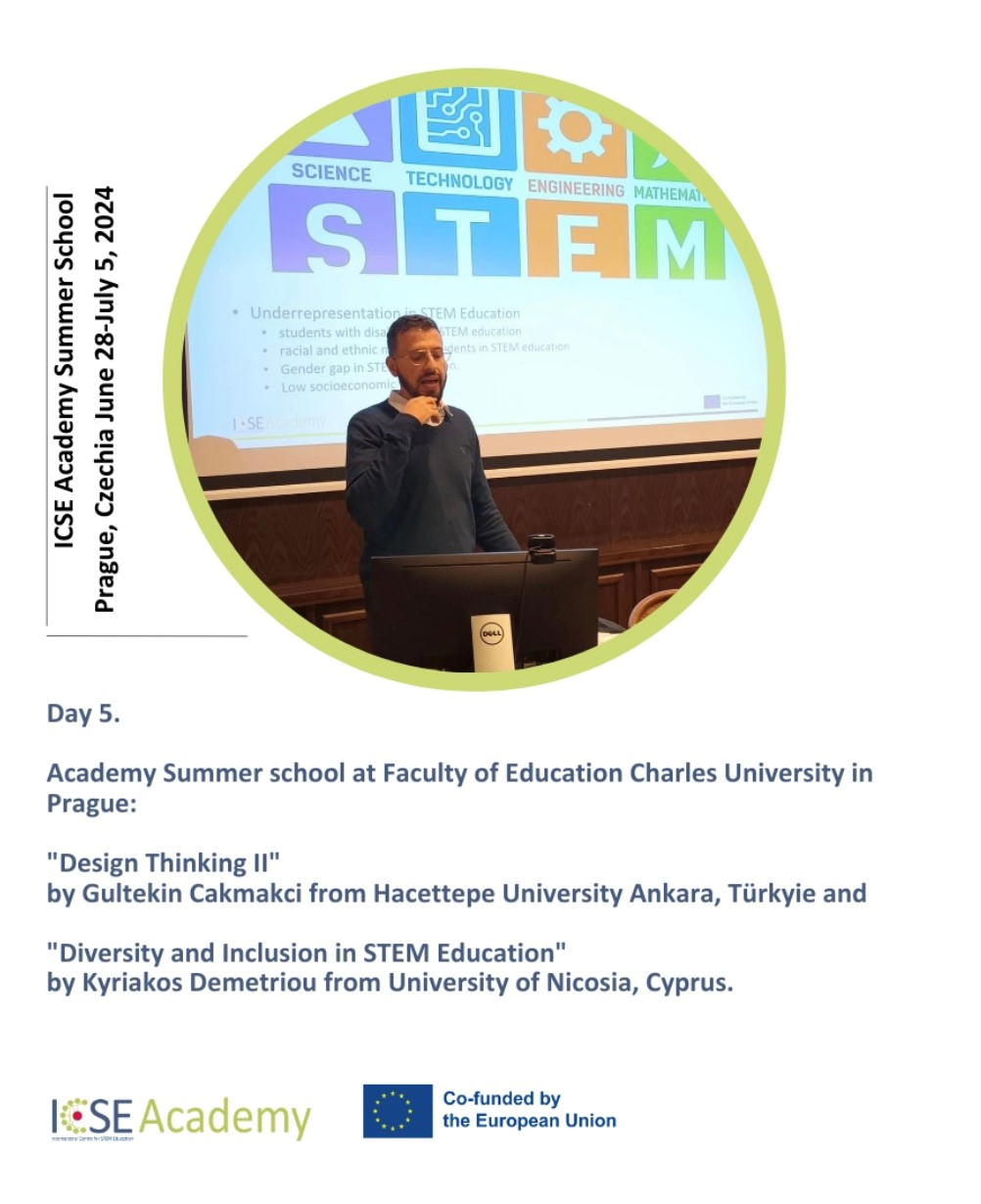
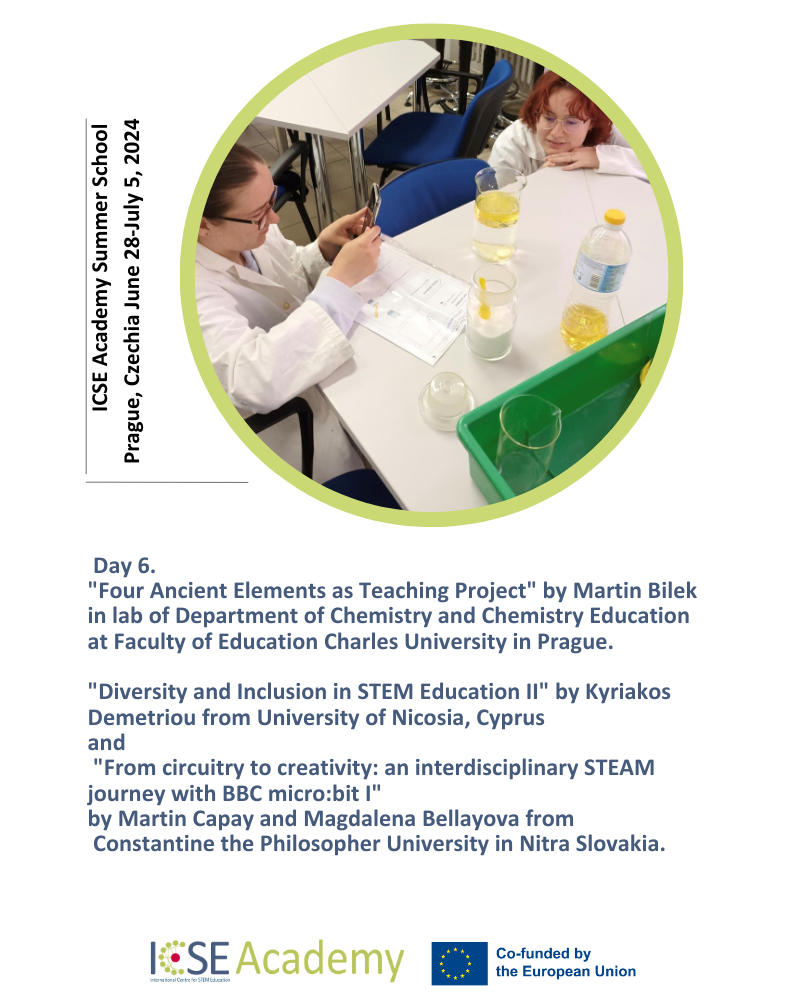
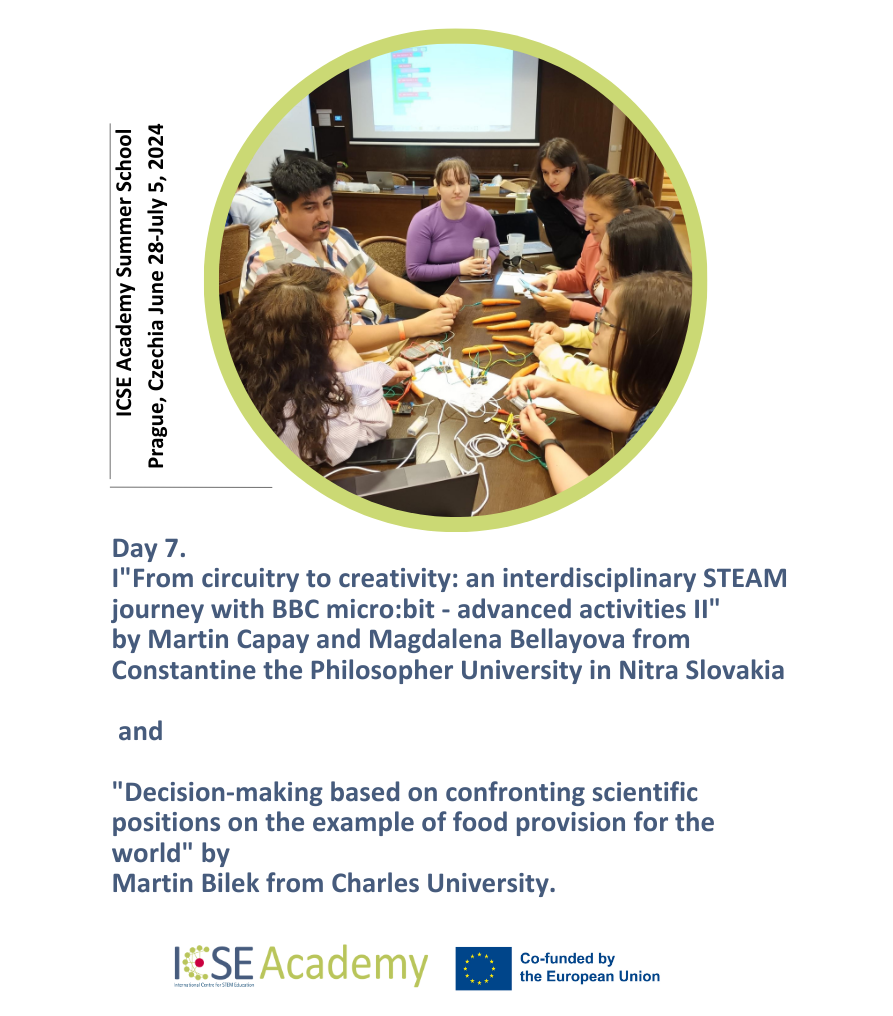
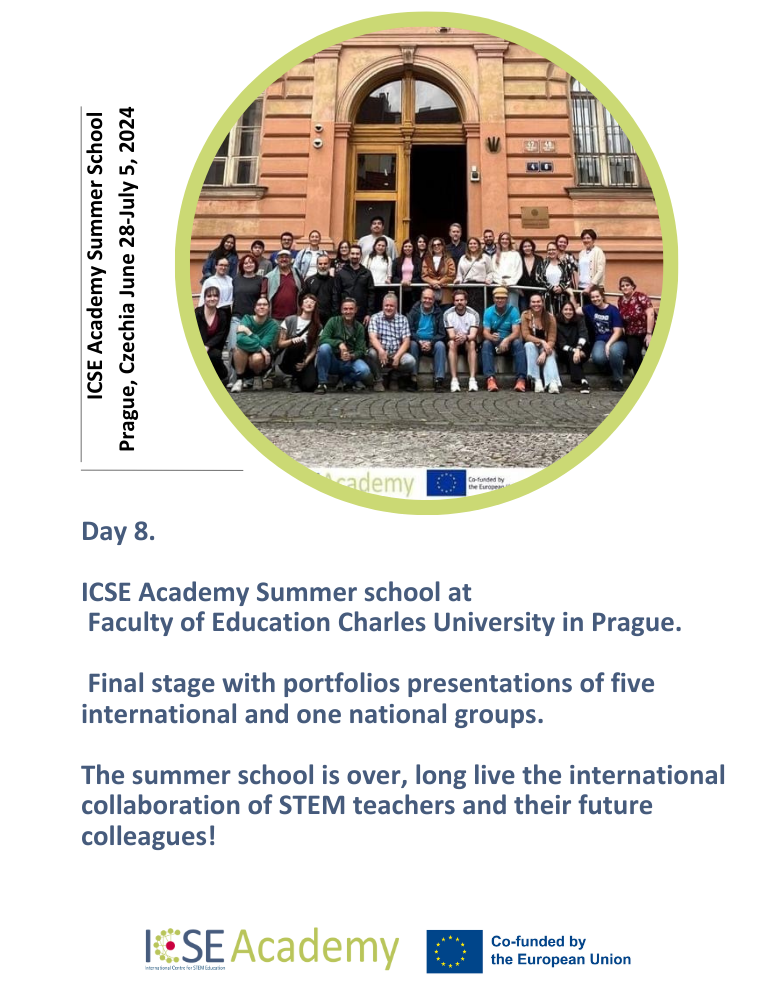
Summer School in Prague, Czechia (June 28 - July 5, 2024)

The focus of this STEM Education Summer School was bringing participants up to date in research and teaching practices in the field of the STEM subjects (Science, Technology, Engineering and Mathematics), and refreshing and deepening the knowledge of meaningful and relevant educational practices.

Topics included:

  • inquiry-based learning and interdisciplinarity
  • cultural diversity and inclusion
  • connections to sustainable development goals (SDGs)
  • use and impact of technology on STEM education

The summer school offered a blend of lectures, seminars and workshops on educational research and towards the diverse interests of student-teachers, doctoral students, teachers, teacher educators and researchers.

Further information

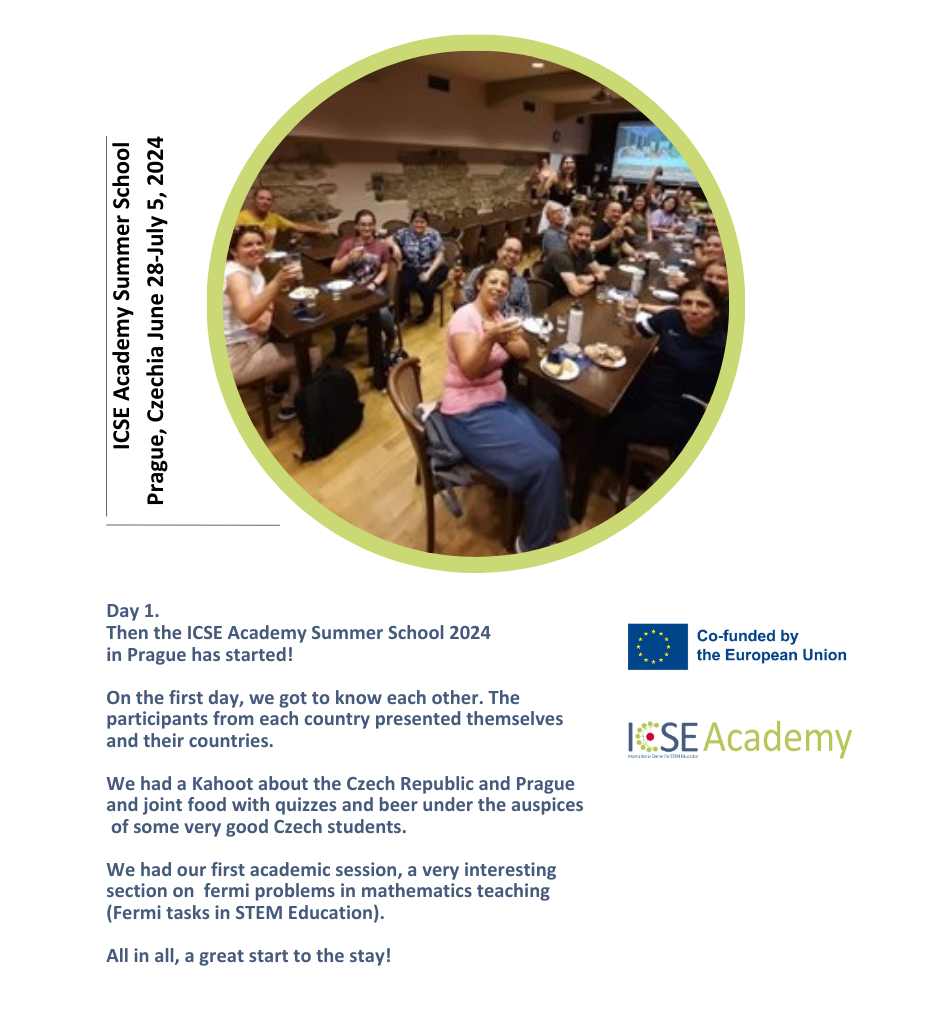
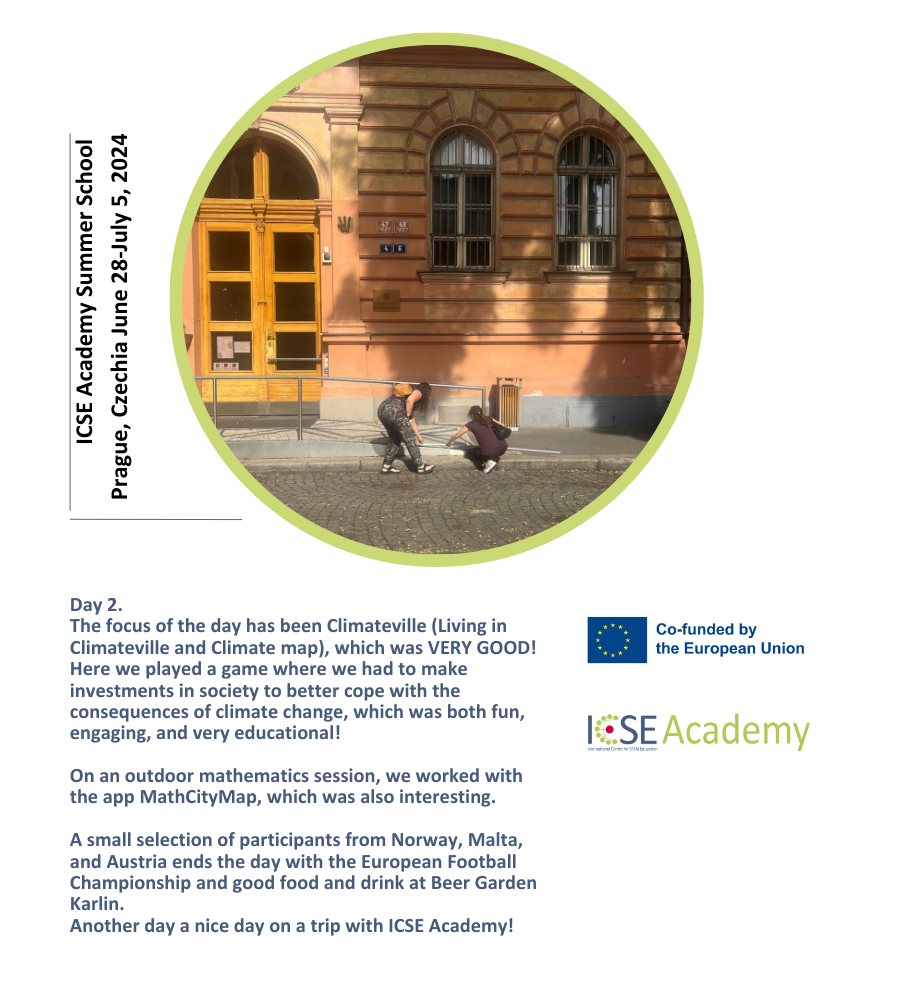
Posts from Social media during the Summer School

Credits (3 ECTS) were provided by the Faculty of Education, Charles University.

The goals of this summer school was an increased awareness with regards to diversity in STEM education and to values such as sustainability and inclusivity in STEM classrooms, an enrichment of thematic knowledge and practical skills, and first-hand intercultural experiences.

Summerschool in Utrecht, Netherland (21-25 August 2023)

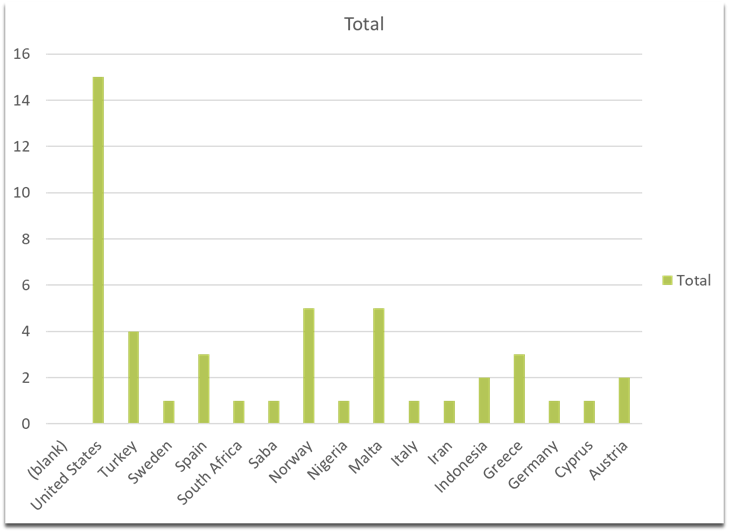
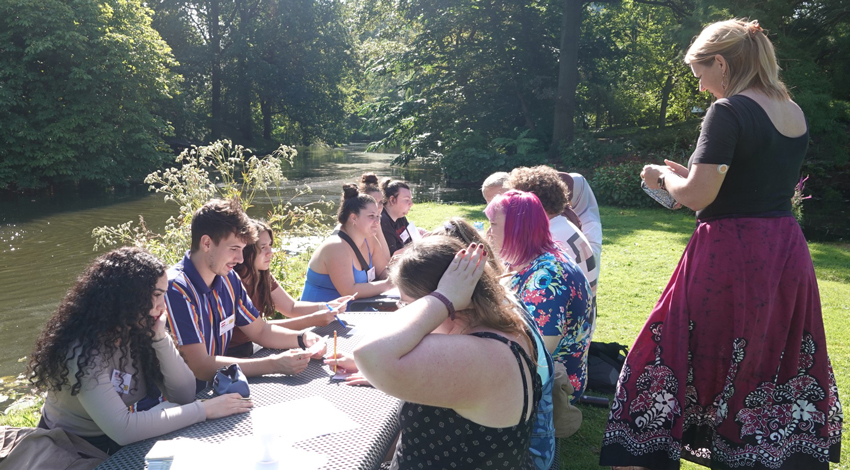
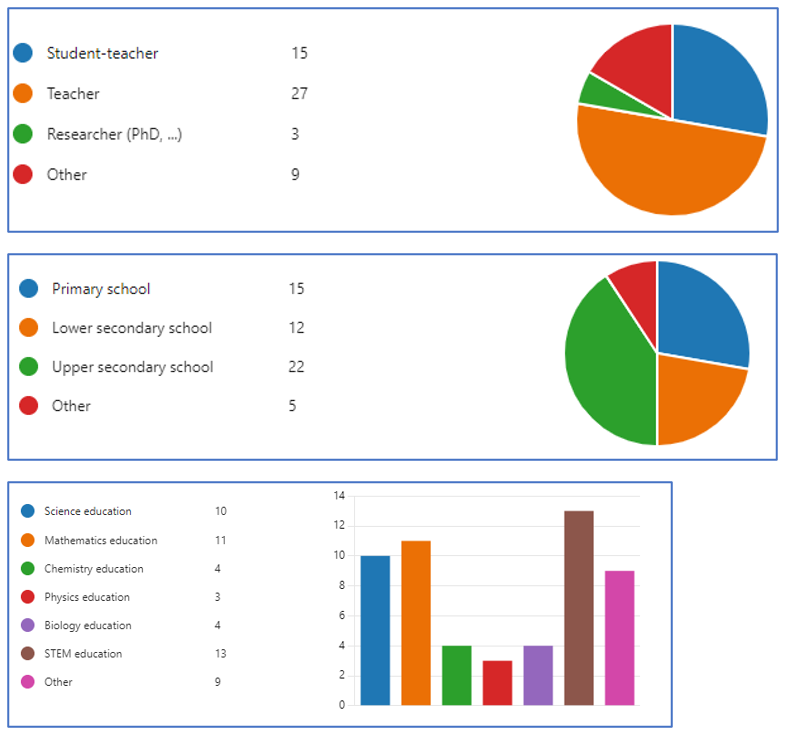
The ICSE Academy Summer School 2023 was organized by the Freudenthal Institute of the Faculty of Science of Utrecht University in collaboration with ICSE Academy. 49 enthusiastic pre- and in-service teachers from several countries participated the Summer School 2023. The goals of the summer school was an increased awareness with regards to diversity in STEM education and to values such as sustainability and inclusivity in STEM classrooms, an enrichment of thematic knowledge and practical skills, and first-hand intercultural experiences.

The focus of the STEM Education summer school was on bringing participants up to date in research and teaching practices in the field of the STEM subjects (Science, Technology, Engineering and Mathematics), and refreshing and deepening the knowledge of meaningful and relevant educational practices. Topics included inquiry-based learning and interdisciplinarity, cultural diversity and inclusion, connections to sustainable development goals (SDGs), and the use and impact of technology on STEM education.

The participants were able to attend activities and workshops on the following topics:

  • Diversity and inclusion
  • Socio-scientific issues and inquiry based learning
  • Computational thinking and gamification
  • Giftedness, scaffolding, language
  • Inquiry in mathematical contexts
  • Interactive, problem based activities
  • International interactions and contexts


You can find more information about the programm by downloading the flyer:

Summer School 2023 Flyer

More informations about the participants:

proSTEM is co-funded by the European Union under grant no. 101052670. Neither the European Union/European Commission nor the Granting Authority EACEA are responsible for the content; nor are they liable for any losses or damage resulting of the use of these websites and its published resources.

Do you have any questions?

LET'S GET IN TOUCH!

E-MailInstagramLinkedInFacebook