
Basic Information
- Interdisciplinarity: Biology, Chemistry, Engineering
- Topic(s): Sustainability / Green Deal
- Duration: 2 years, and ongoing
- Target Age Group: 11+ years old
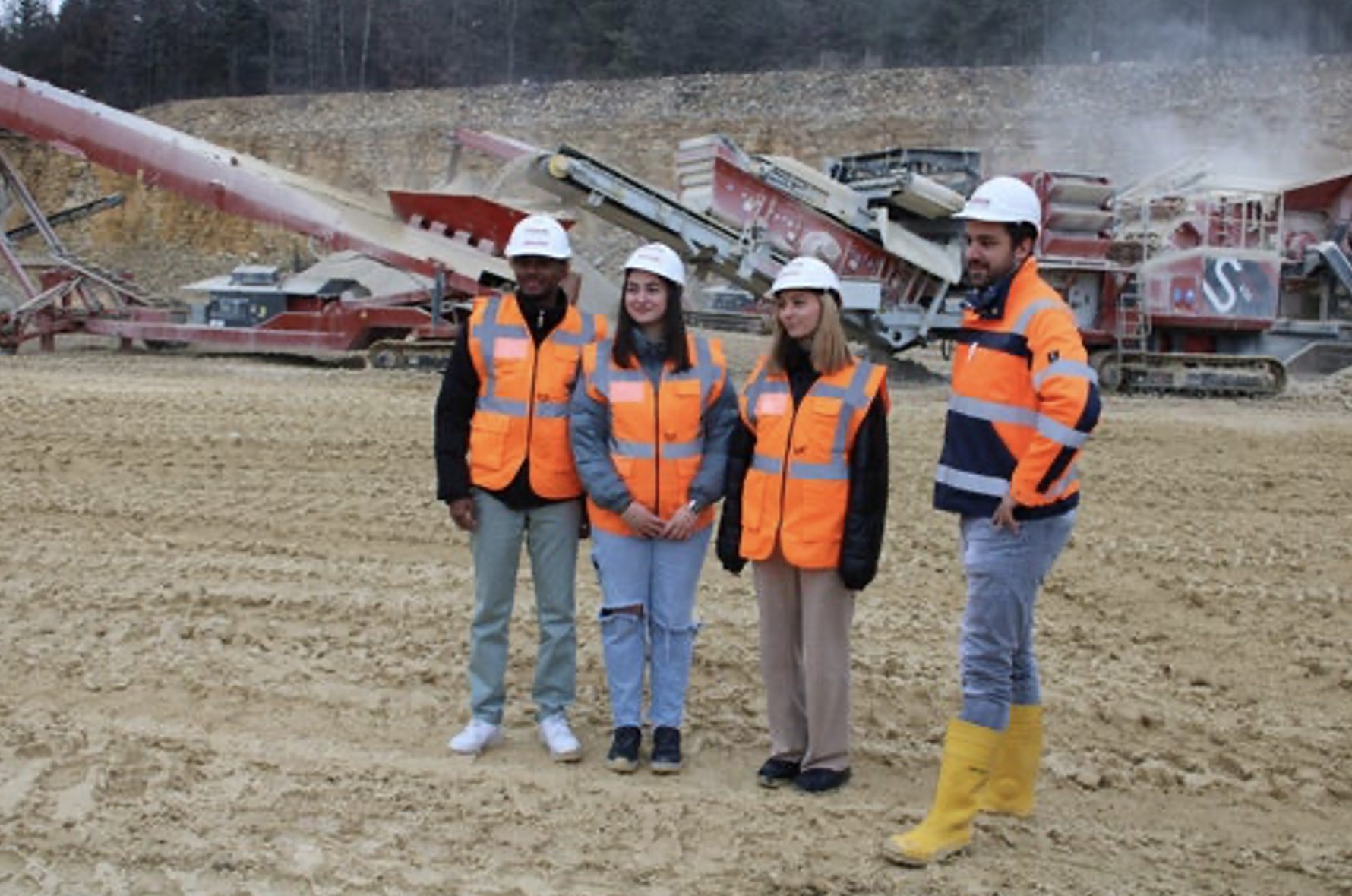
- Partners Involved: Holzbau Bambusch, City of Tuttlingen, Friedrich Storz (stone supplier), Musikhochschule Trossingen, Multiple teachers and students from all disciplines at IKG
Summary
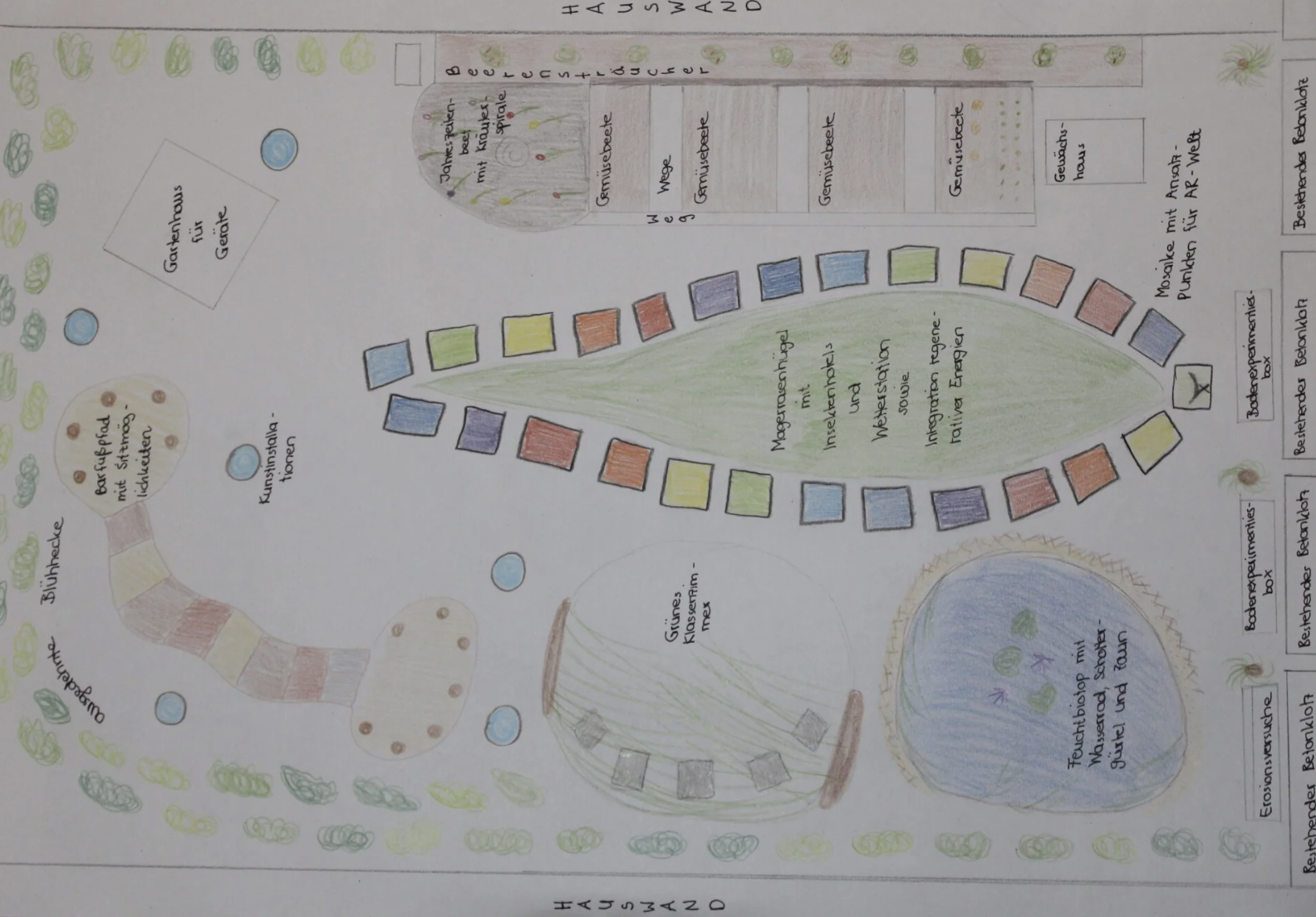
The project “Our Dream School Garden of the Future” at Immanuel-Kant-Gymnasium arose after the original school garden had to be demolished due to a complete renovation of the school. Initially, plans were made for a minimal replacement — a simple lawn — but students and teachers jointly advocated for a vibrant, multifunctional school garden. Supported by several awards, such as the Schulhofträume prize from Deutsche Kinderhilfswerk, the school developed a comprehensive outdoor learning space. The garden now includes a green classroom, a pond, bee colonies, experimental installations, digital learning environments, and artistic exhibits. Nearly all school subjects are involved in its use and ongoing development.
Description of the implementation process of the activity
The project started with students and teachers working together to revive a meaningful outdoor learning space. After securing a significant funding award, the school community collaboratively planned and built the new garden.
The implementation included:
Designing and building a greenhouse and garden house (with professional support and student CAD planning)
Creating insect habitats in the shape of historic landmarks
Constructing experiment boxes for natural science use
Developing interactive digital environments with CoSpaces
Producing a school song and logo
Designing artistic mosaics (e.g., Metamorphoses by Ovid)
Creating a sculpture of Immanuel Kant
Sourcing local materials like stones and willows for ecological installations
The process was interdisciplinary, hands-on, and included phases of research, planning, material procurement, creative production, and digital programming.
Strategies to win schools
This was a single-school initiative. However, internal engagement strategies were strong:
- Empowering student voice (e.g., student council co-deciding plans)
- Integrating the garden project into many subjects
- Using existing school structures (e.g., working groups, subject-specific classes)
- Public recognition through media and awards reinforced participation
Schools support
Internal support mechanisms were extensive:
- Continuous coordination by key teachers (notably Frau Kaltenbach)
- Subject-integrated project tasks
- Artistic and technical mentoring from staff
- External collaborations for building and recording
- Equipment, tools, and spaces provided by the school
- There is no indication of formal educational kits or external training materials.
- Key-success factors
- A clear motivation: reclaiming a meaningful school garden
- Cross-disciplinary involvement and ownership by all subjects
- Tangible results (buildings, installations, digital outputs)
- Community recognition through prizes
- External partnerships that respected student design ideas
- The most successful engagement strategies included combining subject-specific goals with real-world application (e.g., Latin class creating mythological mosaics; science classes building experiment boxes).
- The most effective support strategy was likely the embedding of the project in many subjects, ensuring that all students had an entry point.
Challenges
It was a long-term project that required extensive planning. Coordinating different stakeholders was challenging, and time constraints also made it difficult. Additionally, the school board had to be convinced that everything would work out.
Outcomes
- Full restoration and expansion of the school garden
- Active, ongoing use in biology, geography, physics, ethics, Latin, art, interdisciplinary subjects, and more
- Creation of a school identity song and logo
- Development of interactive digital learning spaces
- Strong student participation and public visibility
- Awards and recognition from national institutions
- Feedback from participants is not directly cited on the website, but the level of involvement suggests a high degree of enthusiasm and ownership.
Reflective Remarks
This activity had a significant long-term influence on the school culture and learning environment. Objectives were achieved and even surpassed: instead of a minimal green space, the school now boasts a vibrant, multi-use garden that continues to expand and develop. The integration across nearly all school subjects ensures lasting sustainability and relevance. Unexpected results include the strong sense of ownership by students and the widespread use of the curriculum.
For future implementations, scaling the model could involve:
– Creating toolkits for other schools
– Sharing best practices through videos or workshops
– Enhancing documentation and assessment of learning impact
The project could act as a blueprint for school transformation through co-creation, sustainability, and digital innovation.
