
Basic Information
- Interdisciplinarity: Physics, Biology
- Duration: 5 days
- Target Age Group: 11–14 years old
- Partners Involved: UNIC
Summary
The Green City activity was conducted as part of a summer school hosted at the University of Nicosia (UNIC), where students explored the principles of sustainable urban planning and environmental responsibility. The activity centred around the concept of designing cities that prioritise green spaces, renewable energy, and low environmental impact. With the support of two visiting physicists, students engaged in hands-on learning, collaborative discussions, and creative problem-solving. The outcome of the activity was the construction of a detailed model of a sustainable “green city,” which reflected students’ understanding of eco-friendly technologies, urban systems, and climate-conscious living. The project successfully combined science, engineering, and design in a dynamic, informal educational setting.
Description of the implementation process of the activity
The Green City activity was implemented during a summer school program hosted by the University of Nicosia (UNIC), offering students a unique opportunity to engage with sustainability concepts in an informal yet structured educational environment. The activity was designed to introduce students to the principles of green urban planning, including energy efficiency, smart infrastructure, public transport, renewable resources, and the role of nature in urban environments.
At the beginning of the activity, students were introduced to the key features of a sustainable city through presentations, brainstorming sessions, and guided discussions. They explored topics such as solar energy, green roofs, recycling systems, pedestrian-friendly design, and urban biodiversity. Students worked in teams to research existing green cities and identify best practices that could inspire their own design.
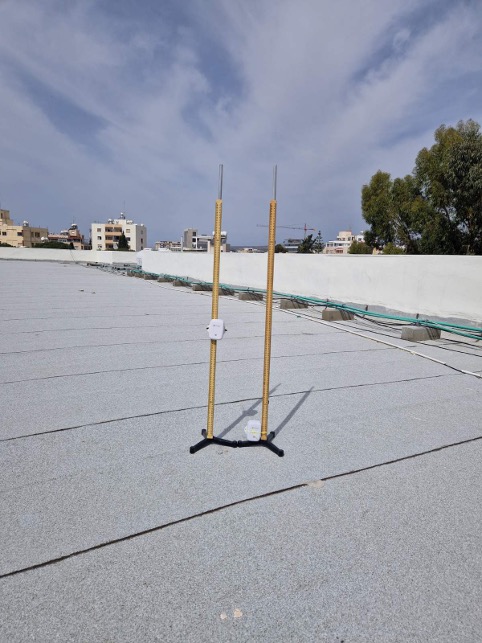
A key feature of the activity was the involvement of two visiting physicists, who collaborated with the project team and offered scientific support throughout the process. These scientists introduced students to the physics behind renewable energy systems, energy consumption, and urban microclimates, providing real-world relevance and depth to the scientific content. Their presence helped demystify scientific careers and offered role models for the students.
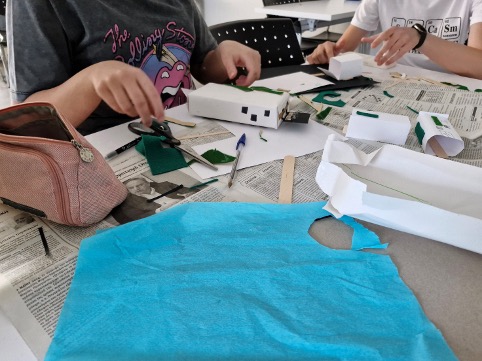
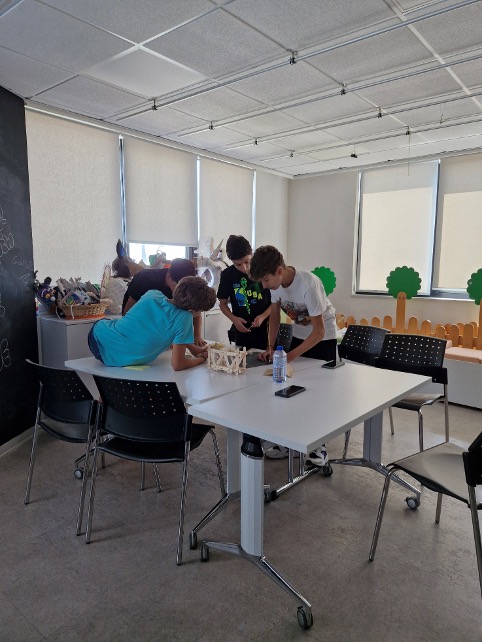
Following the research phase, students moved on to designing and constructing a physical model of their “Green City.” This phase emphasized teamwork, engineering design, spatial planning, and creative thinking. The students used recycled and craft materials to represent green infrastructure elements such as solar panels, public transport systems, parks, vertical gardens, and water-saving technologies.
The model served not only as a visual product but also as a communication tool for students to present their ideas to peers, educators, and invited guests. Throughout the process, the emphasis remained on inquiry-based learning, practical application of scientific concepts, and fostering a vision of sustainable living.
The activity concluded with a group reflection session, where students shared what they learned, discussed challenges, and suggested improvements to their city model. This reflection deepened their understanding and highlighted the importance of science and engineering in building more sustainable futures.
Strategies to win schools
In the case of the Green City activity, there was no need to directly engage or “win” schools, as the activity was embedded within a summer school program hosted by the University of Nicosia (UNIC) under the project. Participation was open to students who voluntarily enrolled in the program, which was designed to provide interdisciplinary, hands-on STEM learning experiences during the summer break.
Schools support
Although the Green City activity did not involve formal collaboration with schools during the academic year, structured support was provided to students within the framework of the summer school program. The support system focused on mentoring, resource accessibility, and scientific guidance throughout the activity’s implementation.
- Scientific Mentorship
A key element of support was the active involvement of two visiting physicists, who worked directly with the students during the activity. These scientists provided expert input on energy efficiency, renewable resources, and the physical principles underlying sustainable technologies (e.g., solar panels, wind energy, thermal insulation). Their presence enriched the learning experience, clarified scientific concepts, and served as an inspiration for students to explore STEM careers. - Facilitator Guidance
The summer school facilitators, including members of the ICSE Science Factory team, provided ongoing coordination and educational support. They guided students through the stages of inquiry, model design, construction, and reflection. Facilitators ensured that the activity remained student-centered while offering help where needed in team organization, problem-solving, and presentation preparation. - Access to Materials and Creative Tools
Students were given access to a variety of craft materials, recycled resources, and visual aids to help construct their physical city model. This practical support allowed students to bring their ideas to life and visualize the real-world implications of their designs. - Encouragement of Peer Collaboration
The facilitators encouraged collaboration and supported team dynamics throughout the project. Students worked in mixed groups, sharing ideas and distributing tasks in a way that fostered communication, cooperation, and mutual learning. - Key-success factors
The success of the Green City activity stemmed from a combination of strategic design elements, a supportive learning environment, expert involvement, and high student motivation. Several key factors contributed to the effectiveness and impact of the activity:
- Informal Learning Context
Conducting the activity within a summer school program allowed for a focused and immersive learning experience. The informal setting removed many of the constraints of the regular school timetable.
- Participation of Real Scientists
The involvement of two visiting physicists played a critical role in enriching the educational experience. Their guidance gave students access to authentic scientific knowledge, particularly in areas like renewable energy and energy-efficient technologies. They also served as approachable role models, helping students envision themselves in future scientific or engineering roles. - Student-Centered, Project-Based Approach
Students were at the heart of the activity—responsible for researching sustainability concepts, proposing design solutions, and building their model. This inquiry-based, creative process fostered ownership, engagement, and deeper learning. The hands-on construction of the city model enabled students to visualize and apply abstract concepts in a concrete, collaborative task.
Challenges
Although the summer school format offered greater flexibility than traditional schooling, the activity was still constrained by the program’s short duration. This limited the time available for in-depth exploration of some scientific and engineering aspects (e.g., detailed calculations for energy use, urban climate modelling).
Reflective remarks
The Green City activity demonstrated how informal learning environments—such as summer schools—can serve as powerful spaces for interdisciplinary exploration, creativity, and student empowerment. By engaging with sustainability challenges through hands-on design and scientific inquiry, students developed not only knowledge but also a sense of agency and responsibility toward their environment and communities.
One of the most striking outcomes of the activity was the students’ enthusiasm for envisioning a better future. Given the freedom to create their ideal city, they approached the task with imagination, and collaboration. The construction of the physical model was more than a creative exercise, it became a platform for expressing values such as equity, environmental care, and innovation.
The presence of real scientists was especially impactful. Their involvement grounded the project in authentic science, provided mentorship, and helped students connect abstract concepts with real-world applications. Many students shared that this was their first experience working directly with scientists, which made science feel more approachable and attainable.
At the same time, the activity underscored the importance of time, flexibility, and differentiated support in open schooling. While not all ideas could be fully developed within the limited duration of the summer program, the activity laid the foundation for deeper inquiry and future learning.
Picture: Self-recorded by University of Zagreb
Outcomes
The Green City activity produced a range of positive outcomes that extended beyond content knowledge, fostering student creativity, scientific reasoning, and civic engagement. Conducted in an informal summer school setting, the project provided a meaningful learning experience that blended environmental science, design, and collaboration.
Scientific Engagement through Real Experts:
The participation of two physicists created meaningful interaction between students and scientists. Students received guidance on technical aspects (e.g., how solar panels work, or how cities absorb and radiate heat), and some showed increased interest in science careers as a result.
Peer Learning and Collaboration:
Working in teams encouraged students to negotiate ideas, divide responsibilities, and value diverse contributions. These interpersonal dynamics were especially valuable in a summer school context, where many students were meeting for the first time.
Increased Environmental Awareness:
Many students reported a deeper awareness of how everyday decisions—such as energy use, transportation, and city planning—affect the environment. They left the program with a clearer understanding of what makes a city sustainable and how they, as future citizens, could contribute to more livable urban environments.
