Basic Information
- Interdisciplinarity: Technology, Engineering, Computing, Physics and Chemistry, Mathematics, Natural Sciences, Geography, ICT, and English,
- Topic(s): Digitalisation / Health
- Duration: 540 minutes
- Target Age Group: 13–15 years old
- Partners Involved: IE-ULisboa, AE Fragata do Tejo
Summary
This OSA aimed to analyse how classroom environmental conditions—specifically temperature, humidity, and CO₂ concentration—affect student well-being and performance. The activity also sought to develop scientific investigation skills, promote technology use, and raise awareness of indoor air quality in school environments. Students used Arduino-based sensor systems to monitor environmental parameters in real-time across different classrooms while conducting surveys about student perceptions of comfort and well-being. Through an interdisciplinary approach combining Physics and Chemistry, Mathematics, Natural Sciences, Geography, ICT,udents developed competencies in and English, ststigation, data analysis, digita scientific invel literacy, and environmental awareness. The activity included supervised use of Artificial Intelligence tools for research and data analysis, encouraging critical thinking about ethical technology use. Students presented their findings through scientific communication formats, demonstrating improved scientific literacy and civic engagement skills.
Description of the implementation process of the activity
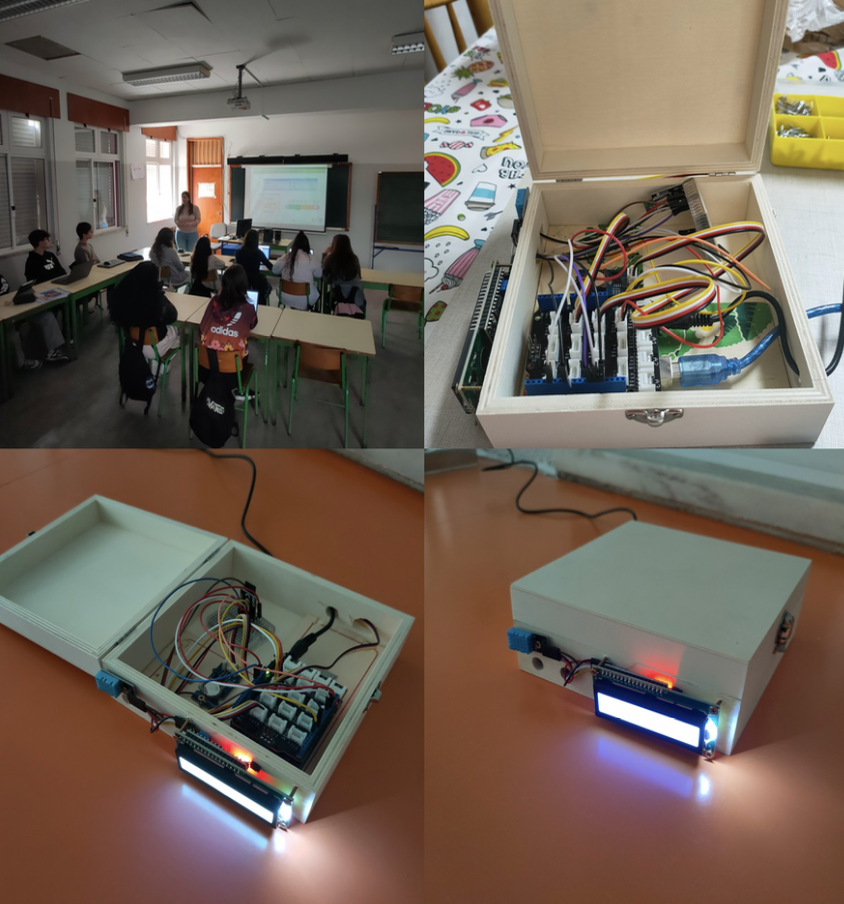
Preparation: Activity preparation involved defining objectives, selecting sensors for temperature, CO₂, and humidity monitoring, and preparing Arduino kits and computers. Students received initial training on sensor operation and basic environmental monitoring principles. Small groups conducted guided research on environmental effects on well-being and school performance, developing research and critical analysis skills.
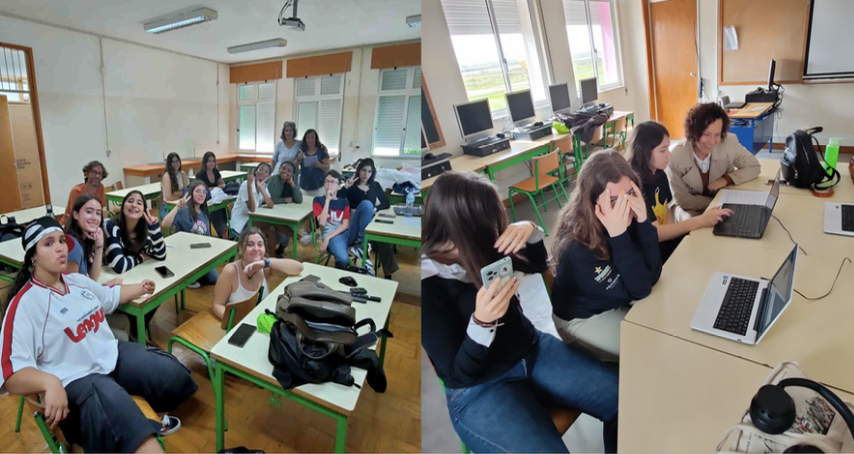
Implementation: Implementation took place over multiple sessions of Clube Ciência Viva (Live Science Clubs). Students assembled sensors and programmed Arduino systems to collect real-time environmental data with guidance from teachers. Sensors were installed in various classrooms, enabling students to monitor environmental conditions over several days and record temporal variations. Students organised and analysed the collected data, identifying patterns and comparing results with scientifich group presented their conclusions to club members and the school community, fostering knowledge sharing and the development of communication skills. literature.
Data Analysis and Focus Refinement: Due to extensive results obtained, students concentrated their study on specific environmental parameters. They selected comprehensive datasets across different classrooms, enabling meaningful comparative analysis and a deeper investigation of environmental impacts on student well-being.
Communication Phase: The activity concluded with students presenting not only to the school community but also to the general public during a special day dedicated to family reception at schools, where they shared findings using scientific formats and engaged with various audiences to disseminate knowledge about classroom environmental quality and its impact on learning.
Strategies to win schools
Various strategic approaches ensured successful school engagement and participation. Teachers received training through the ICSE Science Factory Project partnership, providing access to expert mentorship. The activity was carefully aligned with existing academic requirements, particularly through interdisciplinary articulation across multiple subjects including Physics and Chemistry, Mathematics, Natural Sciences, Geography, and ICT. The project’s focus on environmental conditions and student well- being created strong motivation through immediate personal relevance, as students could directly connect their daily classroom experiences with scientific investigation, making Various strategic approaches ensured successful school engagement and participation. Teachers received training through the ICSE Science Factoryship, gaining access to expert mentorship. The activity was care Project partnerfully aligned with existing academic requirements, particularly through interdisciplinary connections across multiple subjects including Physics and Chemistry, Mathematics, Natural Sciences, Geography, and ICT. The project’s focus on environmental conditions and student well-being fostered strong motivation through immediate personal relevance, as students could directly link their daily classroomh scientific investigation, making abstract environmental concepts tangible and experiences witmeaningful. The Clube Ciência Viva provided essential resources, time, and suitable space for project implementation. At the same time, teachers from various disciplines offered technical support and encouraged critical reflection throughout all phases of the activity. Abstract environmental concepts are tangible and meaningful. The Clube Ciência Viva provided the necessary resources, time, and appropriate space for project implementation. At the same time, teachers from different areas offered technical support and promoted critical reflection throughout all phases of the activity.
Schools support
Multiple support tools were employed to guarantee successful project outcomes. ICSE Science Factory members from IE-ULisboa provided continuous support through regular sessions to address emerging challenges. Interdisciplinary pedagogical support was maintained via ICSE Science Factory teacher training and coordination frameworks, ensuring seamless integration of project activities with curriculumross various subjects. Teachers received ongoing requirements ac professional development, while assessment strategies were developed according to ICSE Science Factory guidelines. Technical support was organised through practical sessions led by teachers (Physics & Chemistry and ICT), enabling participants to learn about circuit assembly, programming, and sensor use, with personalised assistance helping to overcome technical obstacles. Communication support included preparing students for scientific presentation formats, aiding scientific writing, and guiding on public presentation skills needed for community engagement, ensuring students could effectively communicate their research findings to both academic and general audiences.
Key-success factors
Students remained highly engaged throughout the project because they were investigating their own daily learning environment, making scientific principles directly applicable to their personal experiences of comfort and academic performance. The integration of multiple academic disciplines – from physical sciences and mathematics to information technology and communication – illustrated how real-world problems require knowledge from various fields working together. This coordinated approach, with teachers from different subjects collaborating alongside external experts, fostered an educational experience that developed both specific technical skills and broader capabilities in research design, data interpretation, and presenting findings to diverse audiences. Additionally, the thoughtful integration of artificial intelligence tools as research aids introduced students to emerging technologies while encouraging critical evaluation of digital resources and ethical considerations in their use.
Challenges
Several obstacles emerged during the OSA that required adaptive responses and ongoing support strategies. Many students lacked prior experience with electronic circuit assembly or Arduino programming, leading to insecurity and delays in the initial activity phase. This was addressed through organised practical sessions guided by teachers (Physics & Chemistry and ICT), enabling students to gain knowledge about circuit assembly, programming, and sensor use, with personalised support helping to overcome technical issues.
Interpreting collected data demanded mathematical and statistical skills that not all students possessed, making pattern recognition and formulation of evidence-based conclusions challenging. Consequently, specific sessions were conducted within regular classroom work (Mathematics) to develop skills in statistical analysis and graphical representation, enhancing data comprehension and the ability to communicate clear results. Effective time management was also demanding, especially as some activities occurred near the end of the school year within tight schedules and assessment constraints. This was addressed by integrating part of the work directly into classes, linking with programme content from different disciplines, which improved time management and fostered interdisciplinary learning through collaboration between the Clube Ciência Viva and classroom activities. Teachers closely supervised the research process, guiding students in selecting reliable sources and verifying information obtained through AI. Discussions on the criteria for credibility and ethics in using digital tools were held to promote responsible technology use throughout the investigation.
Outcomes
Students effectively mastered environmental monitoring concepts and gained practical knowledge of sensor technology and data analysis typically associated with higher education. The investigation revealed that, although environmental parameters generally stayed within acceptable ranges, students’ perceptions of comfort varied significantly, emphasising the importance of considering both objective measurements and subjective experiences when assessing environmental quality. Students developed advanced research skills, including literature review methods, experimental design, statistical analysis, and scientific communication—abilities that are applicable across academic disciplines and future careers. The supervised use of AI tools enhanced digital and informational literacy, while encouraging critical thinking about the ethical use of technology and the necessity of source verification. Students successfully presented their research findings to both academic and general audiences, demonstrating improved scientific communication skills and increased confidence in engaging with the wider community. The project combined scientific knowledge with citizen education, fostering teamwork, scientific writing, and critical analysis skills, while cultivating a lasting understanding of the connection between scientific research and civic responsibility.
Reflective remarks
The activity’s impact demonstrated how authentic scientific research transforms student understanding of academic content and their role as informed citizens. Students successfully acquired environmental monitoring knowledge while developing critical thinking skills that challenged assumptions about indoor environmental quality. The interdisciplinary approach created meaningful connections between multiple subjects, showing how scientific knowledge integrates across traditional academic boundaries to address real-world problems. For future implementations, beginning the OSA earlier in the academic year would provide more flexible timing, expanding partnerships would increase access to advanced equipment and expertise, and enhanced assessment frameworks should recognize scientific research skills alongside traditional academic content. The activity’s success in connecting academic learning with authentic scientific investigation should be replicated across other environmental and health topics.
