Basic Information
- Interdisciplinarity: Biology, Chemistry, Medicine
- Topic(s): Sustainability / Green Deal / Health
- Duration: 6 weeks
- Target Age Group: 16–17 years old
- Partners Involved: XV. Gymnasium Zagreb
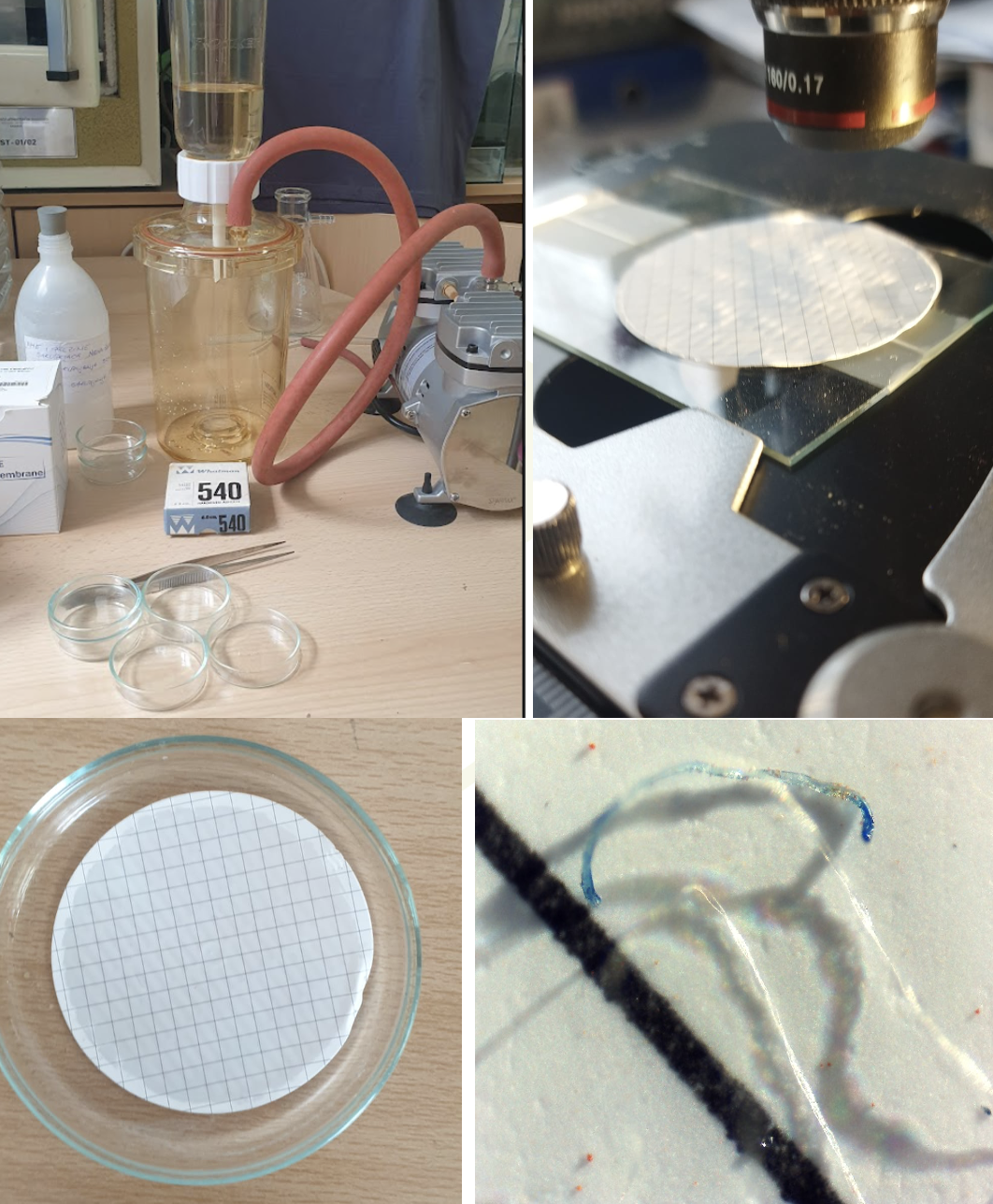
Picture: The apparatus and equipment used by the students
Summary
In this activity, a group of students, supported by two maths teachers and one biology teacher, searched for literature and other information on microplastics and investigated the amount and impact of microplastics in water from their households. Their study was data-driven, and they learned various methods for analysis as well as ways to present the results. The project revealed significant discrepancies in microplastic levels in water across different parts of the capital and raised awareness about the health issues caused by microplastics, not only within the project team but also among all the students to whom the project was presented.
Description of the implementation process of the activity
The activity has been implemented during six weeks. In the first week, the project team members have looked for literature on microplastics and its impact on human helath and the environment. Next they have met with the bology professor and received training in sampling, filtering and analysing microplasitcs in water. Microparticles are counted of a filter paper and their number is estimated based on the exact count on a smaller sample of the paper. Based on the data about average water consumption and the concentration of microplastics in the water, the students have evaluated the amount of microplastics consumed by their peers. Water has been analysed at several locations, in the households of team members, which live in different parts of the city. The results of the analysis show that there is no significant difference in microplasitcs concentration among different parts of the city, but the amount which is consumed is to be taken seriously. The results have been presented during a school event to other students and at the ICSE Science Fair at the Faculty of Science in Zagreb, Croatia.
Strategies to win schools
The engagement of the school is based on previous collaboration of the teachers previous collaboration with the project partners ICES Science Factory. These teachers participate and organize various projects on the national and European level. The main idea for the project has emerged from student discussion. Initially, the goal of the project was for the students to expand their knowledge in mathematics and biology beyond the regular curriculum and to start to develop skills relevant for research in science. As the project eveolved, it has become apparent that the project is gaining more momentum and attention of the students families and friends as the results of the students’ anlysis have shown to be relevant to their every day life and health.
Schools support
The school is involved in many projects on different levels and it is not unusual for the students and the teachers to get engaged in extracurricular activities. The principal supports this kind of projects and encourages teachers to get involved and involve the students. The education happened in the school and made the collaboration easier for all involved students.
Key-success factors
The success of this project lies on the experience of the teacher, engagement of external experts and the students’ idea that puts the health of their families in the centre of their inquiry. It seems very important that the teachers have experience with project-based teaching and value students’ ownership in the process of the activity. The students were highly motivated by the project theme and eager to learn new methods in data analysis, such as statistical tests and the influenc of microplastics on the human organism.
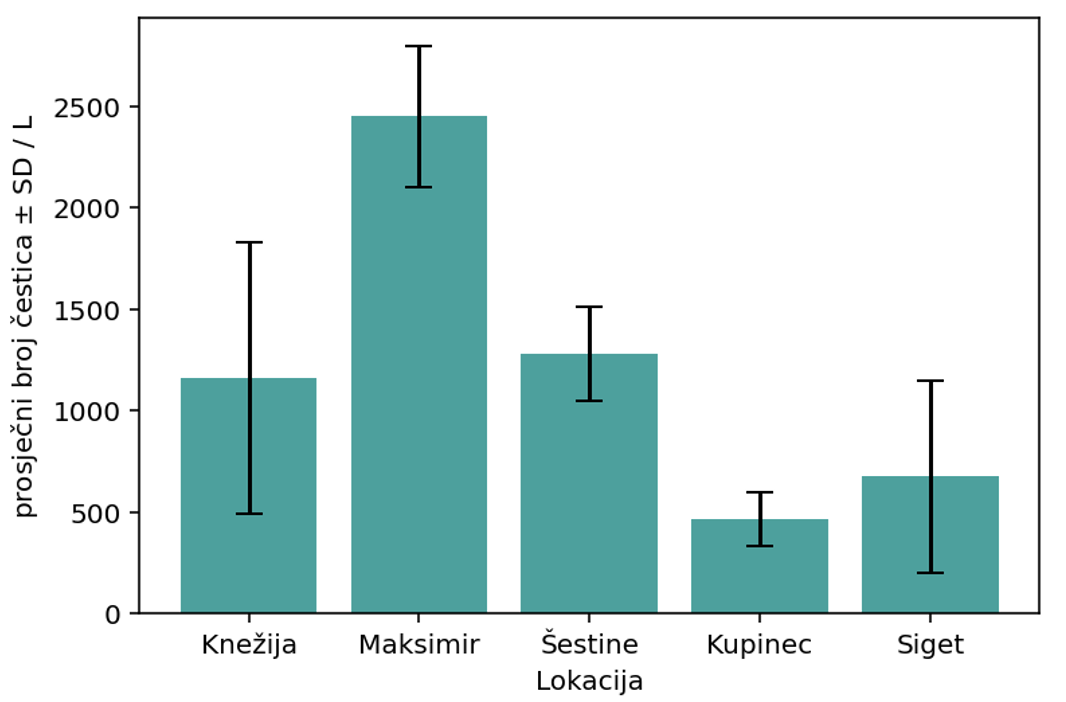
Picture: Graph showing the concentration of microplastics in water in different parts of the city – showing data gathered by the students
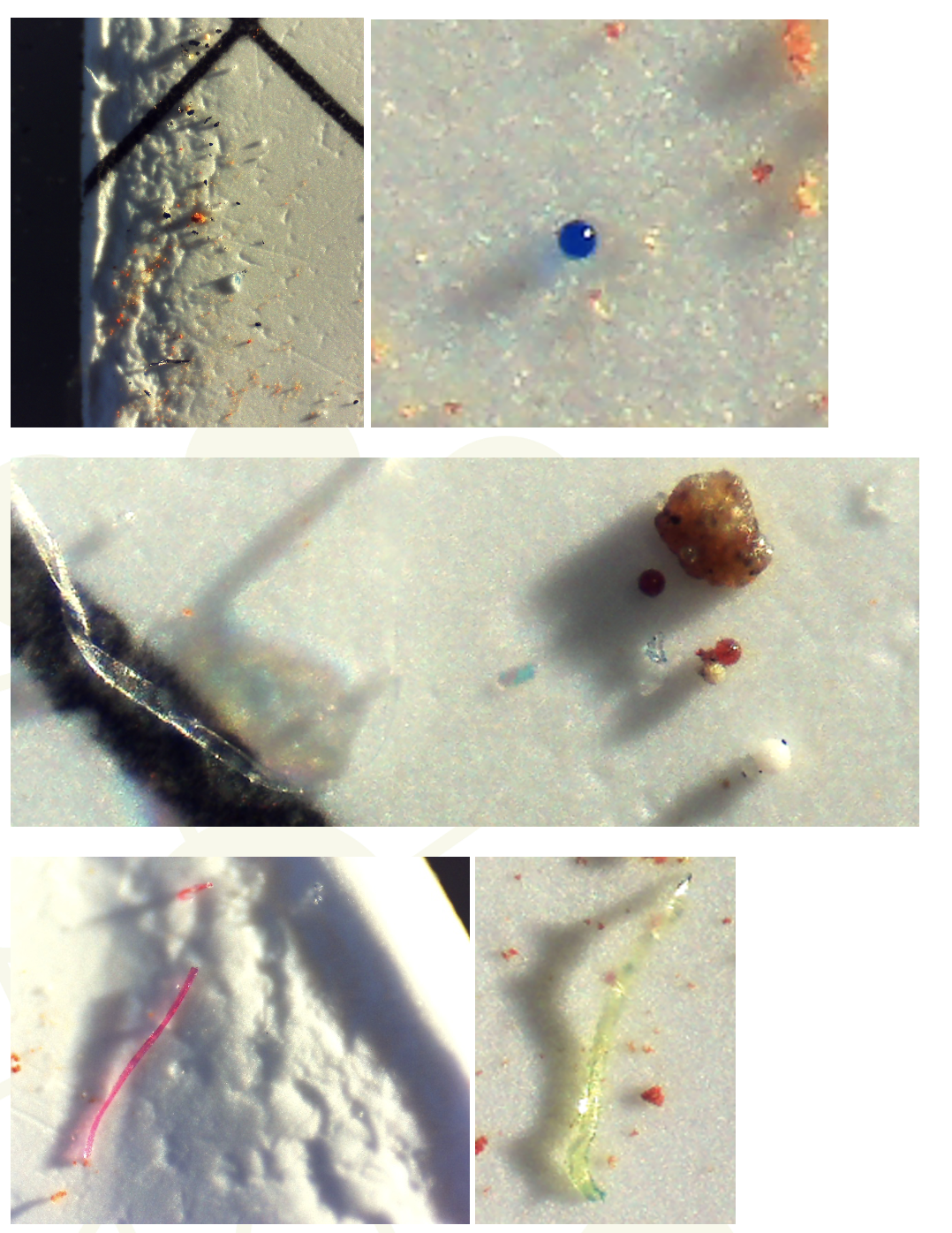
Picture: Images of microplastics are used to share the project results
Challenges
The biggest challenge of the project is its scalability and the potential to solve the problem that awareness raises. Raising awareness is the first step in the solution, but it is a fact that microplastics are so widespread that it will take a long time and very concrete actions at the societal level to address this issue. Nonetheless, the students were motivated to learn something relevant and share it at their level to address the local community.
Reflective Remarks
The project has demonstrated that priorities shift over its duration and that a simple school project can engage the interest ofeir families. A relevant societal (environmental and health) top students and thic is compelling and motivates students to learn. The project has shown a high level of interdisciplinarity, integrating data science, biology, environmental, and societal issues. The students were very successful in leading and completing the project and were very proud to present their work to their peers, families, and the audience at the ICSE Science Fair.
Outcomes
The project discusses the harmful effects of microplastics on human health and the levels of microplastics in drinking water. This is important and relevant information for everyone, and the project raises awareness about a topic that is still not well known among the local communities of the involved students. The project successfully engaged people beyond the teamng other students and the families of team membe itself, includirs. It has been recognised as one of the best projects at the national ICSE Science Fair.
