
Basic Information
- Interdisciplinarity: Maths, Computing, Biology, Psychology
- Duration: 6 months
- Target Age Group: 16–17 years old
- Partners Involved: Peta gimnazija Zagreb (Gymnasium), professor of Psychology Daria Rovan, applied computer science specialist Bjanka Vrljić
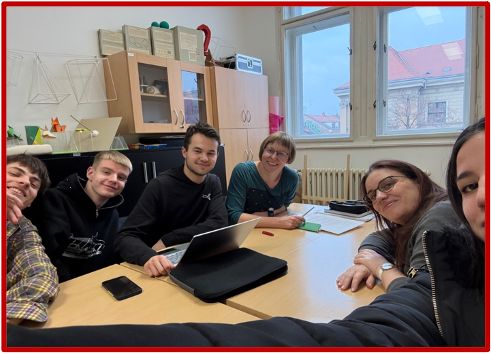
Picture: Meeting with the psychologist, Prof. Daria rovan
Summary
In this activity a group of students, with the support of one math teacher and two external partners, decided to design an online app (platform) that would help first year high school students in their transition problems during their first grade in high school (age 16). The goal of the project was to learn and investigate about the relevant psychological aspects that make the transition to high school difficult for the first grade students and provide support in a form of an app that would give students a possibility for selfreflection (through a quiz) and concrete advice based on their profile and reported problems. The app also provides contact between students and serves as an additional social moment that the students did not have before. The psychological aspects were developed in collaboration with university professor of psychology, data has been analysed guided by a math teacher and the app was created from scratch with the advice from a computer science expert working at the university.
Description of the implementation process of the activity
The activity has been implemented during six months. After forming the team, the students worked on the development of the initial idea to help younger students in adapting to their new environment and responsibilities. Students consulted relevant literature (on motivation and selfregulation of learners) and met with the psychologist. They have identified five dimensions that make their model: feeling pleasant in the school, success expecations, estimation of success, in-depth learning and fear from failure.
In the second phase the team has developed a web app using four different development tools. They had to learn new programming skills and design the app to be user friendly. Next, the questionnaire has been prepared and piloted among students of second, third and fourth year of high school. To analyse the data the students used quantitative methods, but also looked into the open answers qualitatively. They used AI to group open answers, to make categories of students and formulate feedback for different profiles of the studens. In the end, the project team decied to categorize participants into three categories.
There is also a plan to make enhancements based on the interviews with a focus group of first year students in the upcoming months.
Strategies to win schools
The engagement of the school is based on previous collaboration of the teacher with the partners of the project ICES Science Factory. This is an enthusiastic teacher with many activities. Nonetheless, the main idea for the student project came from the students. We believe this was a successful project because the students worked on something that is very close to them and their friends. It was motivating that they will produce something useful for others. The investigation has been interesting as it touches on many disciplines that are very relevant (digitalization, app design, psychology).
Schools support
The teacher has supported their team by finding the external experts that were willing to work with the students. We believe that the external experts were willing to volunteer because they have recognized the students’ willingness and the potential of the idea. The education happened in the school and made the collaboration easier for all involved students.
Key-success factors
The success of this project lies on the experience of the teacher, engagement of external experts and the students’ idea that puts the mental health of their friends and colleagues in the centre of their inquiry. It seems very important that the teachers have experience with project-based teaching and value students’ ownership in the process of the activity. It was important that the students have adequate support of experts to be able to implement their ideas timely and the desired level of quality.
Challenges
The biggest challenge of the project is its ethical delicacy. The project revolves about helping students that struggle and try to adapt. Hence, the project team need to gain trust of their colleagues in order to get unbiased data. It might be a challenge for some group of students to repeat a similar project, but in this case the group of students was big enough and students had different aspirations and knowledge so they could work well as a team and complement each other in different phases.
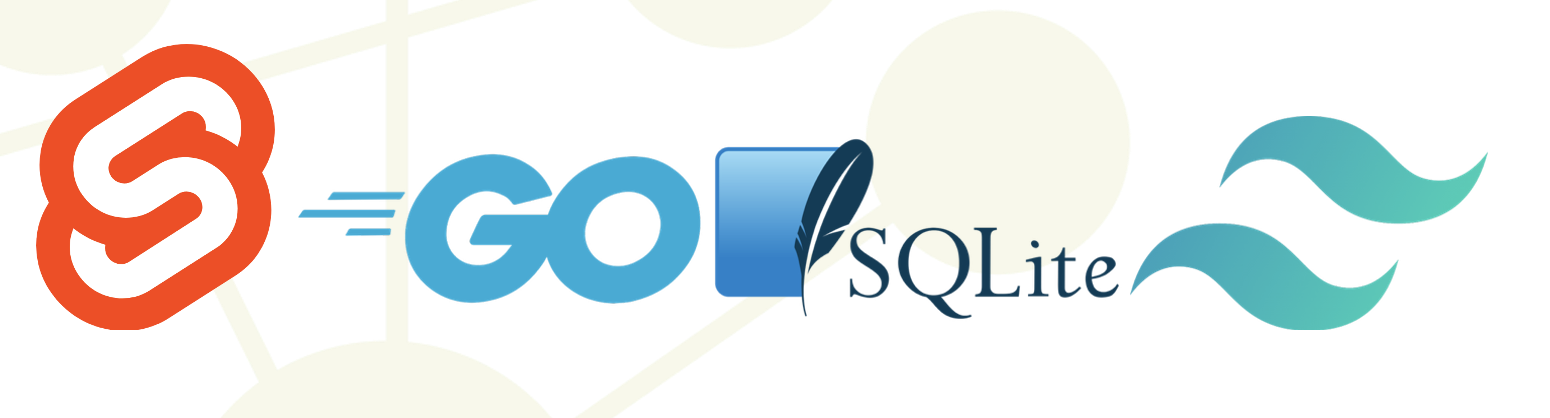
Picture: App development tools used in the project
Reflective remarks
This project has shown that even a social theme (adaptation of learers during their transition in education) requires many activities that belong to the domain of STEM. Mental health is related to many societal, but also biological factors, while developet of the support system is much easier in a technologically highly development environment. Digitalization opens up new methods of research such as better data analysis methods (clusterization, AI assisstance) and students learn a lot of more advanced mathematics and computer science. The social component of the issue engages students into the activity and raises their awarness about the societal issues as well as the role of science to deal with these issues.
Outcomes
The project team has developed a platform (web app) that serves first year high school students to reflect on their needs and obtain support during their transition to high school. Each student gets their own psychological profile and personalized feedback with advice for learning. It is remarkable that this product can be equally used by students in other schools, so the outreach is huge. The activity has been recognized as the best project at the national ICSE science fair.
