
Basic Information
- Interdisciplinarity: Biology, Technology, Computing
- Topic(s): Health / Digitalisation
- Duration: Approximately 3 months
- Target Age Group: 11–13 years old
- Partners Involved: HU, Healthy Nutrition Centre
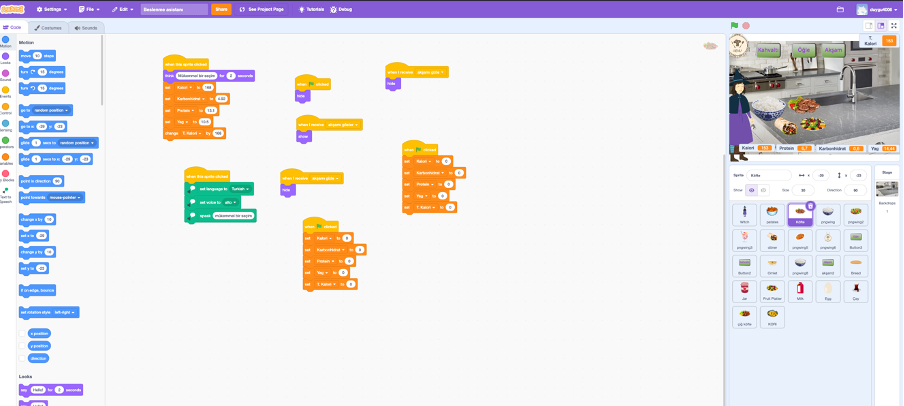
Picture: Scratch working screen of the project
Summary
The “Healthy Nutrition Assistant” project aimed to help students understand the nutritional value of foods through research, data organisation, and a Scratch-based digital application. Students explored essential food groups, caloric values, and nutritional components by analysing commonly consumed meals. Using Scratch, they designed an interactive menu where users could click on a dish and view its detailed nutritional information. The activity promoted algorithmic thinking, awareness of healthy living, and digital creativity.
Description of the implementation process of the activity
The activity began with an awareness session where the teacher guided a class discussion on the meaning of healthy eating. Posters, short videos, and presentations were used to inform students about major food groups and daily nutritional needs. Each student or group was then tasked with selecting 3-5 commonly consumed meals from their homes or the school canteen.
Students conducted online research using reliable sources, such as the national health database, to compile data on calories, protein, fat, and carbohydrates for each meal. This information was tabulated and later used in their Scratch projects. Adopting a simplified approach, students developed an interface where selecting a food item triggered a display of its nutritional values. After peer feedback sessions, the apps were refined for functionality and design. The final phase included a school-wide fair where students presented their projects to peers, teachers, and parents.
Strategies to win schools
Schools were invited to participate through established teacher networks and direct communication, emphasising the interdisciplinary nature of the project. The integration of health, ICT, and science within a single activity was highlighted as an innovative educational opportunity. The Scratch platform, being free and student-friendly, helped ease initial concerns. The project was presented as an opportunity to enhance 21st-century skills, including digital literacy and critical thinking.
Schools support
Support was provided through teacher guides, nutrition data templates, and example Scratch projects. Online mentoring sessions were offered during the coding phase, and students received structured handouts explaining how to create variables and menu interfaces in Scratch. Feedback opportunities were provided through peer-testing phases, and the university mentor team offered debugging support and improvement suggestions throughout the activity.
Key-success factors
One key success factor was the personal connection students had to the subject matter—they analysed meals they actually consumed, making the learning context authentic. The use of Scratch allowed creative digital expression and engaged even those with little prior coding experience. Integrating science, mathematics, ICT, and social skills created a multidimensional learning experience. Sharing the final projects during a school science fair enhanced students’ motivation and helped build communication confidence.
Challenges
The main challenges included differing digital skills among students and limited prior experience with Scratch for some. This was tackled by grouping students thoughtfully and providing template-based guidance. Access to nutritional databases was also an issue for some; thus, a curated list of trustworthy resources was shared. A few technical problems with variable usage in Scratch were resolved during mentoring sessions through screenshots and walkthroughs.
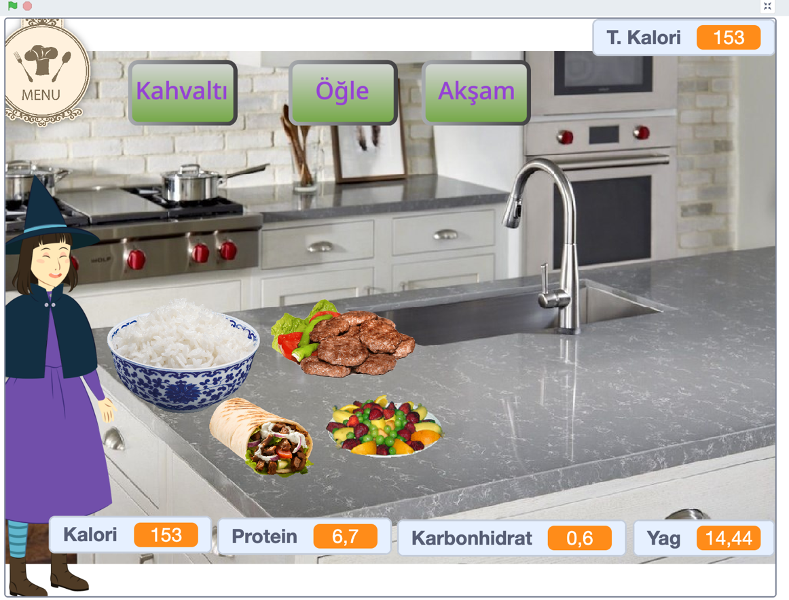
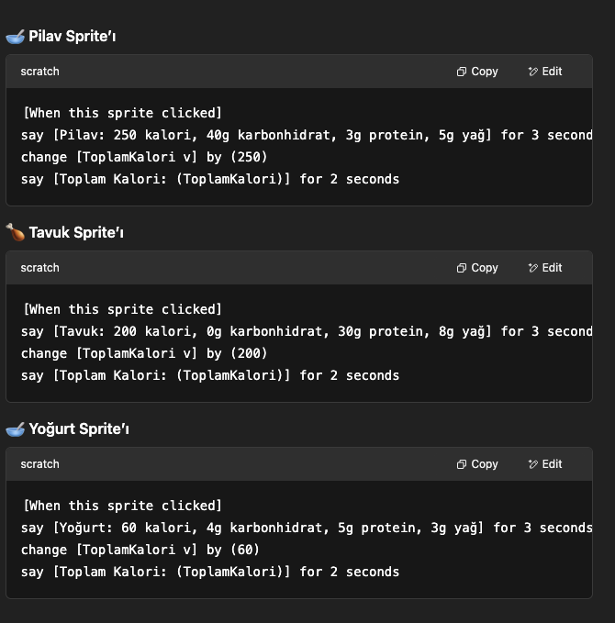
Picture: Completed healthy nutrition assistant display
Outcomes
Participants reported heightened awareness of healthy eating habits and increased interest in coding. Teachers observed improvements in teamwork and problem-solving skills. Parents valued the practical relevance of the project. The project was showcased during a school technology day, receiving positive feedback from school administrators and visitors. Students proposed adding more meal options oroice and animation features in future iterations. incorporating v
Reflective remarks
The project successfully achieved its objectives by combining digital skills with health awareness. Students gained insights into their eating habits while learning coding and data visualisation. The activity’s success indicates strong potential for replication. Future implementations could include app extensions that suggest meals based on daily calorie limits or gamification features for younger learners. To scale this project, integration with platforms like App Inventor could enable mobile-friendly versions.
