
Basic Information
- Interdisciplinarity: Biology, Chemistry
- Topic(s): Sustainability / Green Deal
- Duration: 4 months
- Target Age Group: 6–7 years old
- Partners Involved: Primary school 1st grade students, Teachers in the project team, Parents, School administration, Cafeteria staff, school canteen staff, Çiğdemim Foundation
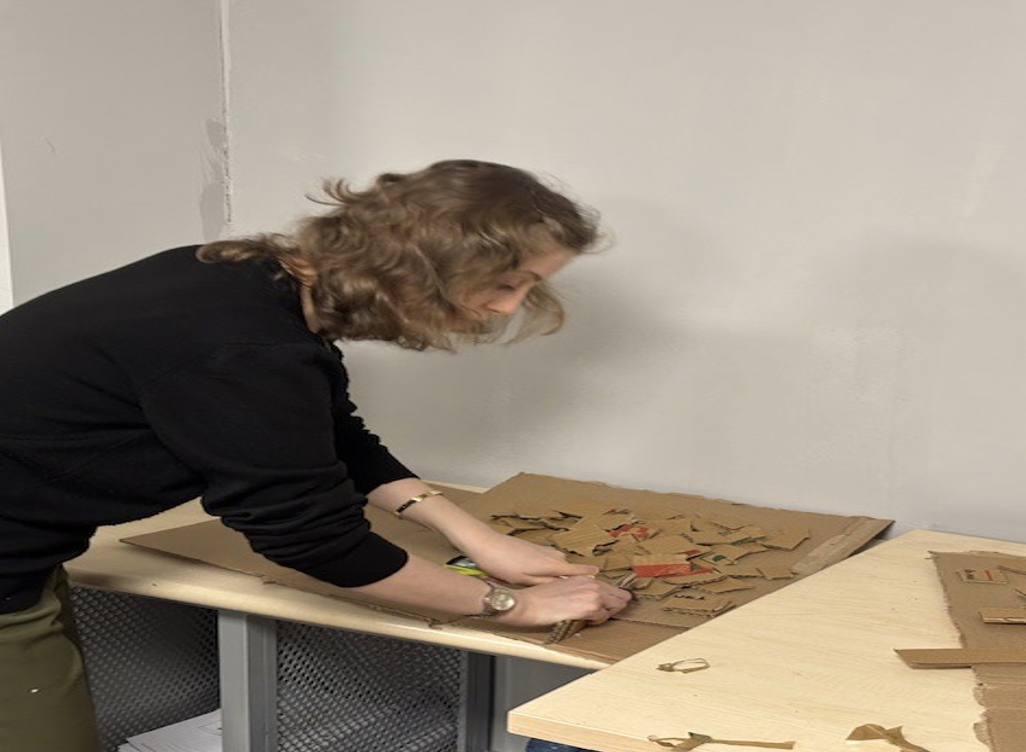
Picture: Cut the ingredients for the compost into small pieces
Summary
The aim of this project is to raise awareness on reducing and preventing food loss and waste, and to collect and compost the resulting waste. This project is carried out with 1st-grade students of Maya Schools’ Oran Campus and their teachers. In addition, parents, school administrators, school cafeteria staff, school canteen staff, and the foundation to which the compost fertiliser will be donated are other participants of the project. This project covers the second term of the 2024-2025 academic year. After the information and awareness activities about the project were carried out, an information meeting was held for the parents and the project was introduced. Then, nitrogen and carbon content wastes were collected. The collected wastes were divided into small pieces. It was turned into a compost pile in a one-cubic-meter compost box located in the Maya Schools Environmental Laboratory. The mixing and moistening processes of the compost are ongoing. It is expected to be compost after 2-3 months.
Description of the implementation process of the activity
Our first-grade students increased their awareness by learning about the tea plant, as well as recycling and composting, as part of the project. They carried out activities on the journey of tea from the garden to the pulp, explored the role of organic waste among recyclable waste, and identified various types of organic waste, thereby increasing their knowledge and skills in the subject. It was stated that not only will tea be used when making compost. It was stated that 1/3 of the nitrogenous waste and 2/3 of the carbonous waste will be used when creating a compost pile.
The information letter of the project was sent to the 1st-grade parents via “K12”. Our school administrators held meetings with the Çiğdemim Association to which the compost would be donated.
Then, what would be done within the scope of the project was planned. These steps are as follows:
- Holding an online notification meeting within the scope of the project,
- Collecting nitrogen-containing tea and various organic wastes under the roof of the school,
- Collecting carbon-containing waste under the roof of the school,
- Separating the collected wastes into small pieces,
- Composting process,
- Compost formation process.
Strategies to win schools
Online Parent Meeting
We organised an online meeting with parents to introduce the project. During the meeting, we explained the project’s goals, its implementation, and how parents could support their children throughout the process.
Poster Announcement in the School
To inform and engage the school community, we designed a promotional poster for the project and the parent meeting. These posters were displayed in various areas around the school to attract attention and raise awareness.
Sharing the Meeting Link with Parents
The link for the online meeting was shared directly with parents. This ensured easy access and helped increase participation.
Schools support
During the implementation of the Open Schooling project under the ICSE Science Factory framework, our school received various forms of support from the Önce Öğretmen Foundation and the project organizers. Educational and pedagogical materials, including lesson plans, composting guides, activity sheets, and visual aids tailored to the “From Tea Waste to Fertilizer” project were provided to support our teachers in delivering environmental education to 1st-grade students.
Teachers participated in training sessions focused on composting techniques, sustainability education, and student engagement strategies. These sessions equipped educators with the necessary knowledge and tools to implement the project effectively.
To ensure continuous support, regular communication channels were established through email and instant messaging groups. Project mentors maintained close contact with the school, providing guidance, answering questions, and helping with the organization of classroom activities. Online and in-person meetings were conducted to monitor progress and offer feedback.
This comprehensive support structure helped ensure the smooth execution of our project, while also fostering collaboration and capacity-building among educators.
Key-success factors
Several key factors contributed to the success of the “From Tea Waste to Fertiliser” project, implemented at our school during the second term of the 2024–2025 academic year in cooperation with the Önce Öğretmen Foundation under the ICSE Science Factory program.
Strategic planning and early coordination among teachers and project mentors helped establish a clear timeline and set of responsibilities. The hands-on nature of the project—collecting used tea waste and transforming it into compost—made it engaging and age-appropriate for 1st-grade students. The use of real-life examples from students’ daily lives increased relevance and interest.
Resource management was also a strength; materials such as compost bins, containers, and visual aids were prepared and used effectively. All activities were designed to be simple, safe, and educational for young learners.
Stakeholder engagement played a crucial role. Teachers actively guided students through each step, and parents were encouraged to contribute used tea waste
Challenges
During the implementation of the “From Tea Waste to Fertilizer” project, we were fortunate to encounter very few challenges. The project ran smoothly, and all processes went according to plan.
Resource Availability: One of the main reasons for the smooth execution was the strong support from our school, which provided all necessary resources, including compost bins, materials, and educational tools. The school’s commitment to the project ensured that all logistics were well-organized and readily available, preventing any significant resource-related issues.
Stakeholder Engagement: We also had a high level of engagement from both students and parents. The communication between teachers, students, and parents was very effective, and all parties were enthusiastic about contributing to the project. As a result, we did not face any significant barriers related to participation.
Smooth Process and Planning: The project’s timeline was carefully planned, and all activities were executed according to schedule. Teachers were well-prepared to guide students through the composting process, and no technical difficulties arose during implementation.
Description of the Implementation Process
This activity was designed by members of the Faculty of Science at the University of Zagreb and was conducted in one of the faculty’s lecture halls, with a duration of 120 minutes.
The main leaders of the activity were Prof. Dr. Sc. Željka Milin Šipuš and Dr. Sc. Matija Bašić, both members of the Department of Mathematics at the Faculty of Science. Their role was to introduce participants to the topic, coordinate their activities during the problem-solving process, and guide them through heuristic discussions following the completion of each task. Additional support in organization, coordination, and logistics was provided by Petra Vidović (HMD) and Renata Švedrec (HMD).
A total of 11 participants took part in the Lighthouse activity. Most of them were 17 years old (age range: 16 to 18) and were accompanied by a mathematics teacher. The participants played an active role throughout the session. They were encouraged to ask questions, leading to thought-provoking discussions. Some of the questions raised included:
- “Is it possible to analyze the geometry of a stent? How? How is this done professionally?”
- “How can we derive an algebraic expression to model drug concentration? What if multiple drugs are involved? Which professions analyze such problems?”
Since the activity was structured as a series of heuristic conversations, participants were prompted with guiding questions such as:
- “How does the increase in drug concentration in the blood behave? What type of dependency does it follow?”
- “What is the meaning of a mathematical model? What defines a linear model? What is the difference between linearity, correlation, and causality?”
These discussions encouraged participants to actively engage, reason critically, and justify their answers. They employed various problem-solving strategies, and one of the most interesting aspects was observing the evolution of their reasoning. Because the tasks were embedded in real-world contexts, the problems initially appeared to be biological in nature. As a result, participants first relied on their knowledge of biology (e.g., capillaries, arteries). However, as the activity leaders posed further sub-questions, it became evident how their reasoning gradually shifted from biology to mathematics, illustrating the interdisciplinary nature of the topic.
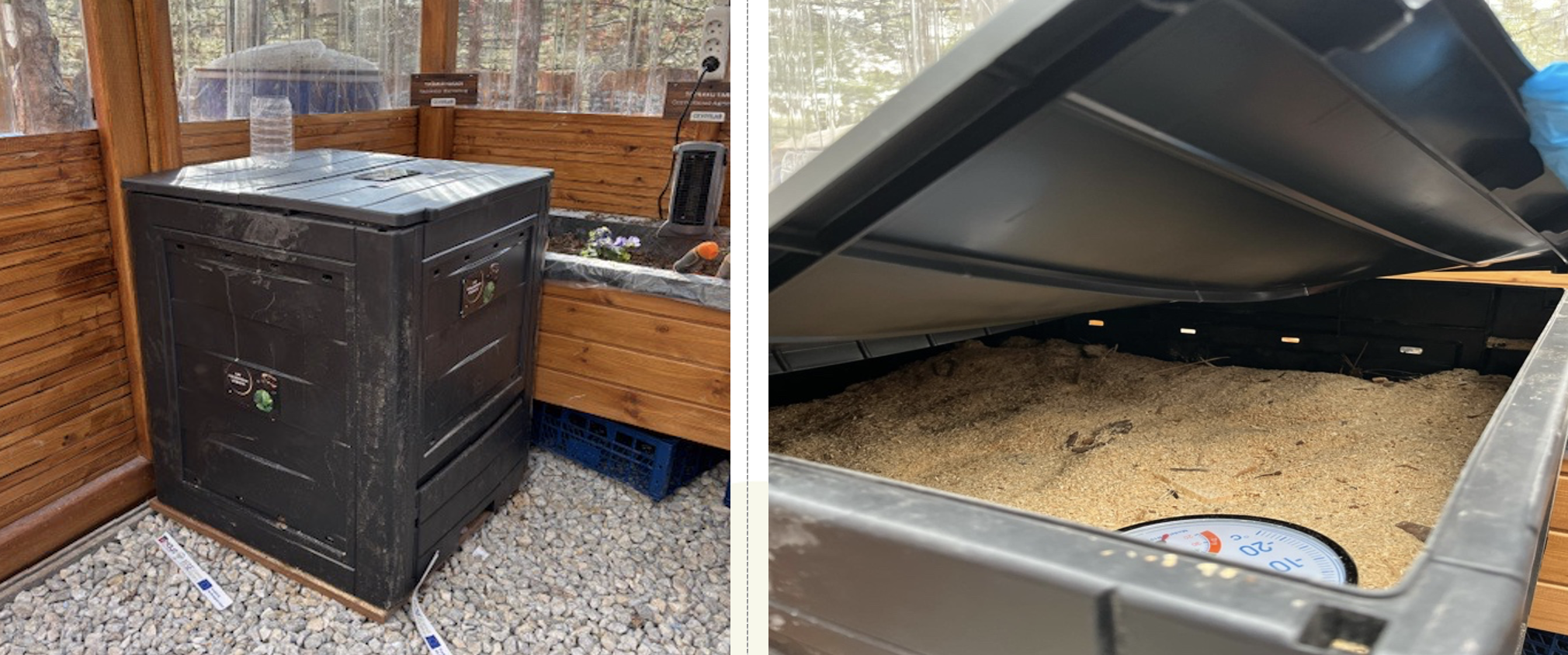
Picture: Mixing and moistening the compost heap
Outcomes
The “From Tea Waste to Fertilizer” project has made notable progress, with positive results already visible, despite the composting process still being underway. Although the compost is not yet fully formed, important milestones have been reached in raising awareness, engaging students, and fostering a sense of community around sustainability.
Achievements:
Environmental Awareness: Students have developed a deeper understanding of environmental issues, particularly waste reduction and sustainability, through the ongoing composting process. The practical approach has enabled them to directly engage with waste management topics.
Active Participation: Students are actively involved in mixing and moistening the compost, demonstrating great enthusiasm for the project. While the composting process is still in its early phase, their continued involvement indicates a growing interest in sustainability.
Community Involvement: Parents and the local community have shown support by providing tea waste, helping the school to sustain its composting efforts. This collective participation has strengthened ties between the school and its community.
Short Snapshot:
The project remains in progress, with students continually participating in the composting process. Although the compost has not yet matured, they are gaining valuable lessons in waste reduction and sustainability through hands-on activities. The excitement and curiosity about the final product are evident, encouraging further discussions at home, with many families interested in starting their own composting practices.
In conclusion, although the composting process is still ongoing, the project has already achieved meaningful outcomes in student engagement, environmental awareness, and community participation. Feedback from students, teachers, and parents has been overwhelmingly positive, highlighting the project’s success in raising awareness about sustainability.
Reflective Remarks
The “From Tea Waste to Fertiliser” project is an ongoing initiative that has already begun to significantly influence both students and the school community. The project has successfully achieved its initial aims of raising environmental awareness, teaching composting, and promoting sustainability. However, as the composting process is still ongoing, the full outcomes of the project remain to be seen.
Assessment of Objectives:
The main objectives of the project have largely been met. Students have gained awareness of environmental issues and have learned the basics of composting. Currently, they are actively involved in mixing and moistening the compost materials as part of the process. However, since the composting is not yet complete, it is premature to claim that all objectives have been fully accomplished. The compost still needs time to mature and turn into usable fertiliser.
Unexpected Outcomes:
One unexpected outcome was the high level of interest shown by both students and parents in the project. Students have demonstrated great enthusiasm for collecting tea waste and participating in composting. Furthermore, the environmental awareness generated by the project has extended beyond the classroom, with students discussing composting at home and sharing their experiences with their families.
Areas for Improvement:
At the start of the composting process, it became evident that the stages of mixing and moistening are time-consuming. To improve efficiency, we might consider adding a greater variety of materials to accelerate the process. In future iterations, sourcing additional local materials to enhance composting could be beneficial. Moreover, students expressed interest in using technology to track and monitor the composting process. Implementing a digital platform or tracking tool could enhance engagement and enrich learning opportunities.
Long-Term Sustainability:
As the composting process is still underway, assessing long-term sustainability at this point is challenging. Nonetheless, integrating composting practices into the school’s curriculum on a permanent basis will be crucial for fostering a lasting environmental impact. This might involve establishing a dedicated composting programme or collaborating with local environmental organisations to ensure the continuation of the practice beyond the initial project timeframe. Engaging the wider community, including local businesses, could also support ongoing resources and sustainability efforts.
